

Rio Celeste La Fortuna: Complete Visitor’s Guide 2026
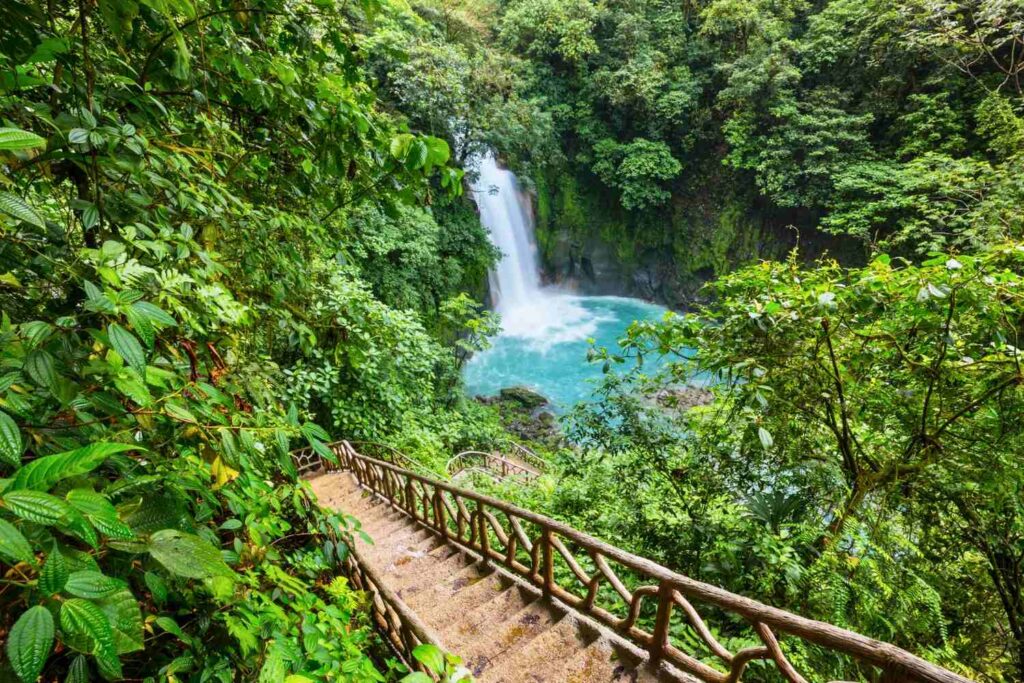
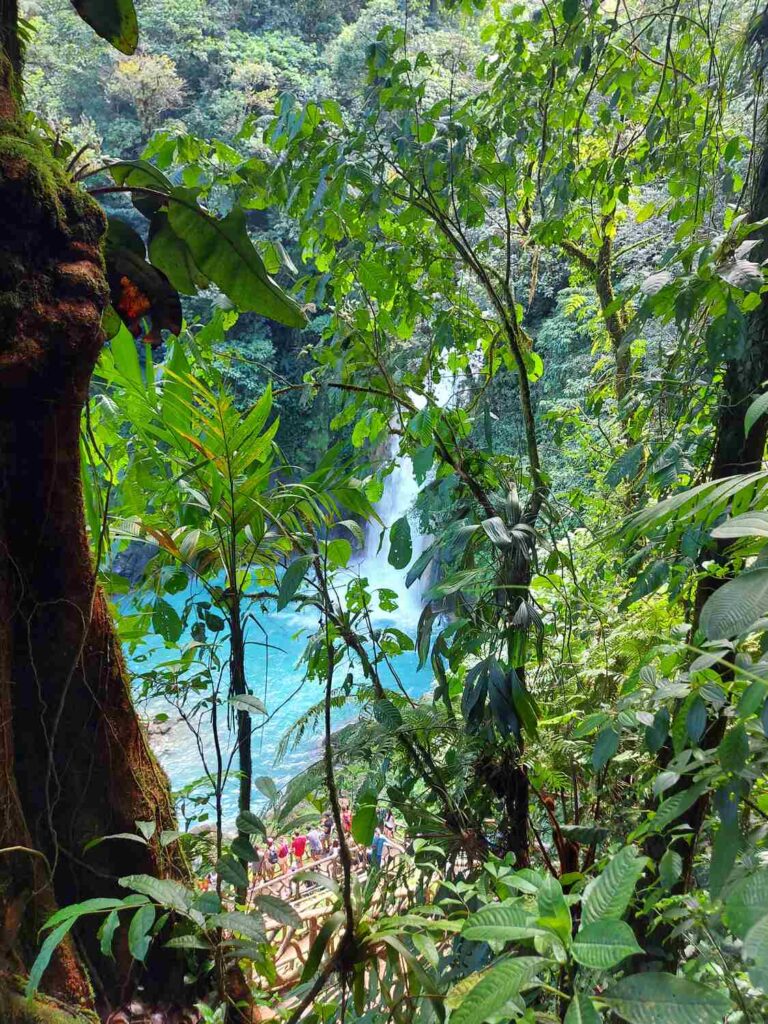
Rio Celeste La Fortuna isn’t some tourist trap that looks amazing online but average in person. The water really is that beautiful. Almost fake-looking blue.
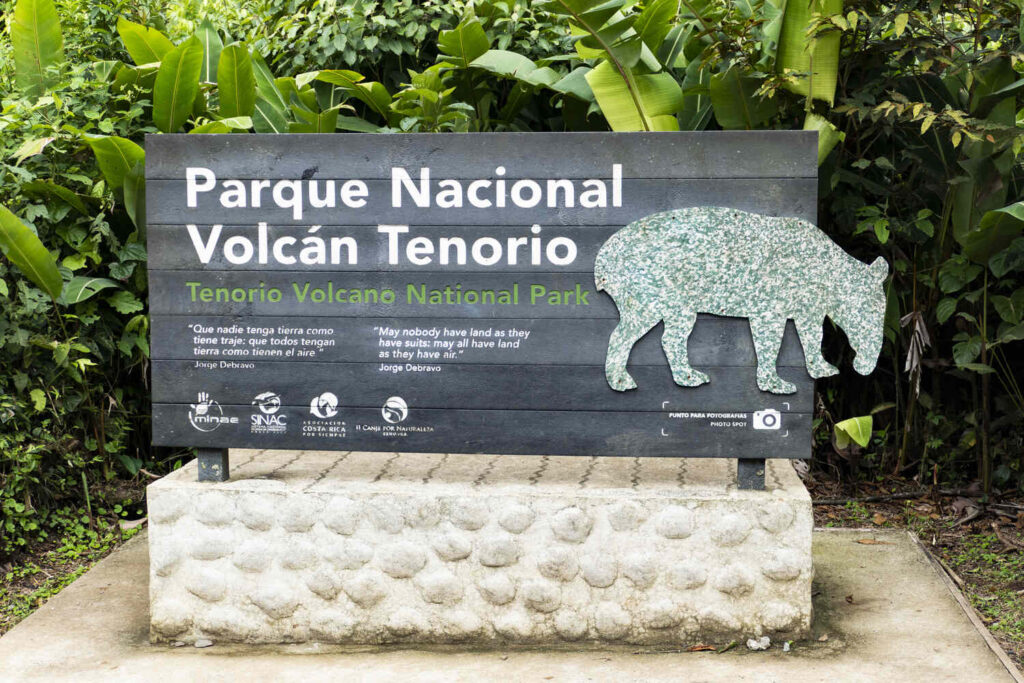
You’ll find it inside Tenorio Volcano National Park, about an hour and a half from La Fortuna. The hike takes some effort (and mud, lots of mud), but when you finally see the waterfall and the part along the river, it’s genuinely hard to process in person.
This guide breaks down everything you need to know about Rio Celeste in Costa Rica, the famous Laguna Azul. from entry fees to whether you can actually swim there.
Overview About Rio Celeste in Costa Rica
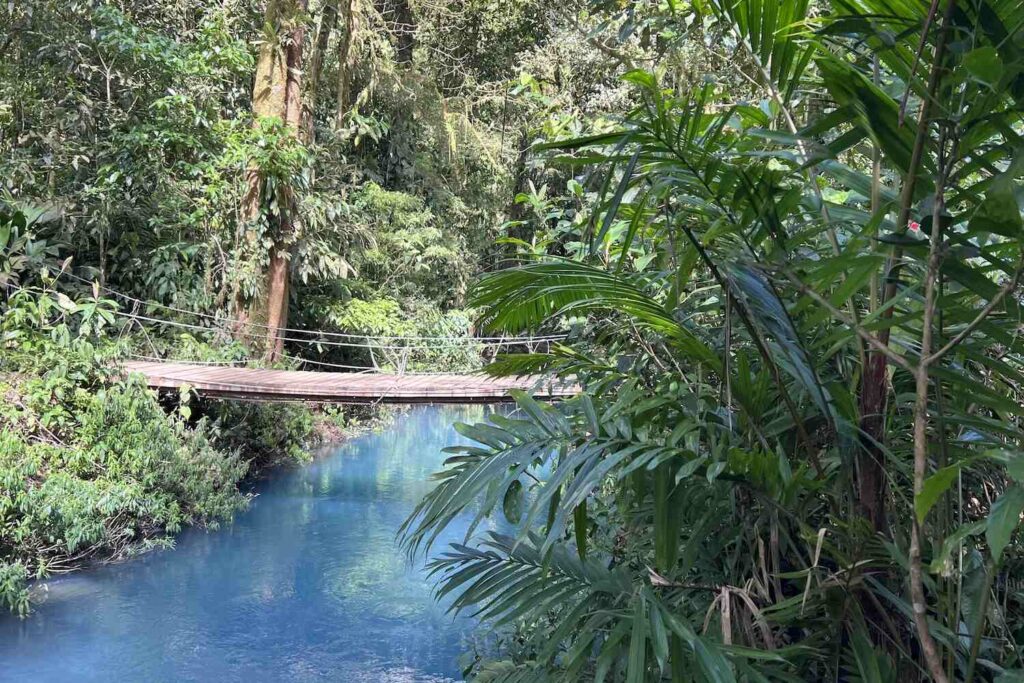
The name literally means “sky-blue river,” and once you see it you’ll get why. It’s one of the best places to visit in Costa Rica. Rio Celeste is famous for its bright turquoise water, a natural effect caused by minerals mixing at the river bend.
It’s not just about the waterfall either. On the way up, you’ll pass the hot springs and that cool spot where two clear rivers merge into one stream (called Teñideros). Here’s what you need to know before going.
Where is Rio Celeste in Costa Rica?
Rio Celeste is at the Tenorio Volcano National Park, in northern Costa Rica. The closest town is Bijagua. Small place, couple of hotels, a few sodas, nothing fancy. If you’re based in La Fortuna near Arenal, you’ll have to drive northwest to get to the park entrance.
The place is remote, and that’s kind of the whole point. There’s a rainforest all around you, animals everywhere, and a quiet that’s hard to find in other tourist spots in Costa Rica.
How Far is Rio Celeste from La Fortuna?
It’s about 70 kilometers (43 miles) from La Fortuna to Rio Celeste waterfall in Costa Rica. It usually takes 1.5 to 2 hours by rental car, and you can set the arrival point on your GPS to the entrance of Tenorio Volcano National. The drive isn’t bad, but the last stretch can be a bit bumpy, especially if it’s been raining.
I once rented a tiny sedan and regretted it halfway in. If you can, go for an SUV. Google Maps tends to underestimate the time, so add an extra 20 minutes just in case.
Got questions? Join our Costa Rica community on Reddit for real tips.
Planning your trip? Join our Costa Rica Facebook group for insider tips.
How to Get to Rio Celeste From La Fortuna?
Driving yourself is the easiest option. You’ll have more freedom with stops and timing. Just follow Route 142 out of La Fortuna, then connect to Route 6 toward Bijagua, and from there signs point to the park.
No car? You can hop on a local bus, but it’s slow and usually involves transfers (not fun if you’re carrying a backpack). Many people book a day tour from La Fortuna that include transport, entry, and lunch. It’s pricier, but you don’t have to stress about directions.
Do You Need a Tour Guide?
If you’re planning on visiting Costa Rica, you don’t necessarily need a tour guide for most of the main tourist attractions. That’s the case for Rio Celeste.
You can easily visit it on your own as long as you’ve got a car and know the park’s opening hours. The trail is clearly marked, and it’s a straightforward hike, but having a guide can make a difference if you want to spot wildlife or learn more about the rainforest.
Can You Swim in Rio Celeste La Fortuna?
No, swimming inside Tenorio Volcano National Park is off-limits. The government banned it years ago to protect the ecosystem. Honestly, it makes sense. The color is gorgeous, but the ecosystem behind it is delicate.
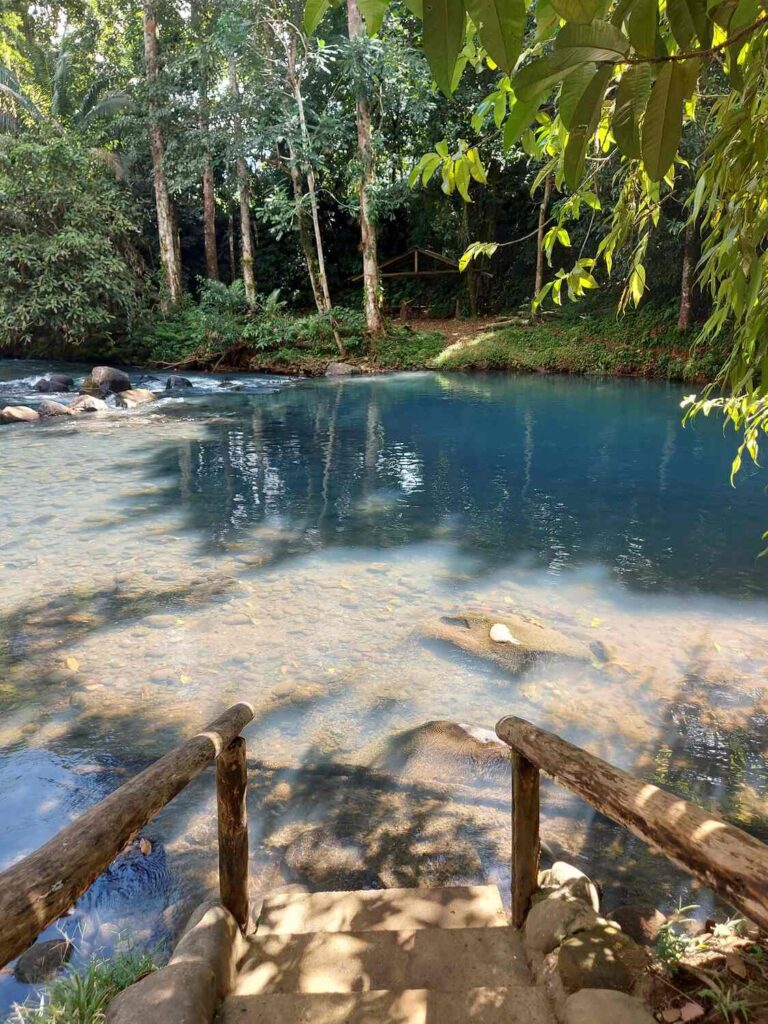
That said, what you can do is swim in spots just outside the park, like El Pilón, where the water still looks unreal but you won’t get fined for jumping in.
Rio Celeste Opening Times and Entrance Fee
The Tenorio Volcano National Park is open daily from 8:00 AM until 4:00 PM. That said, the last allowed entry is at 1:45 PM, so we recommend getting there earlier to make the most of it.
Foreigners pay $12 to enter Tenorio Volcano National Park, while locals pay a little less (₡800). Kids under 12 get in for free. Parking costs an extra $6, cash only (there are cheaper spots outside the park, but it can be a hassle finding one). There are fruit sellers at the parking lot too, worth a stop before you head in.
Prices don’t seem huge, but keep in mind the park doesn’t accept dollars everywhere, so it’s smart to carry some colones too. Tickets can be bought online or right at the entrance, though weekends sometimes sell out quicker.
Hiking at Rio Celeste La Fortuna
The trail inside Tenorio Volcano National Park is around 6 kilometers (3.7 miles) round trip, and most people finish it in two to three hours. The pace depends a lot on the weather, fitness, and how many times you stop for photos.
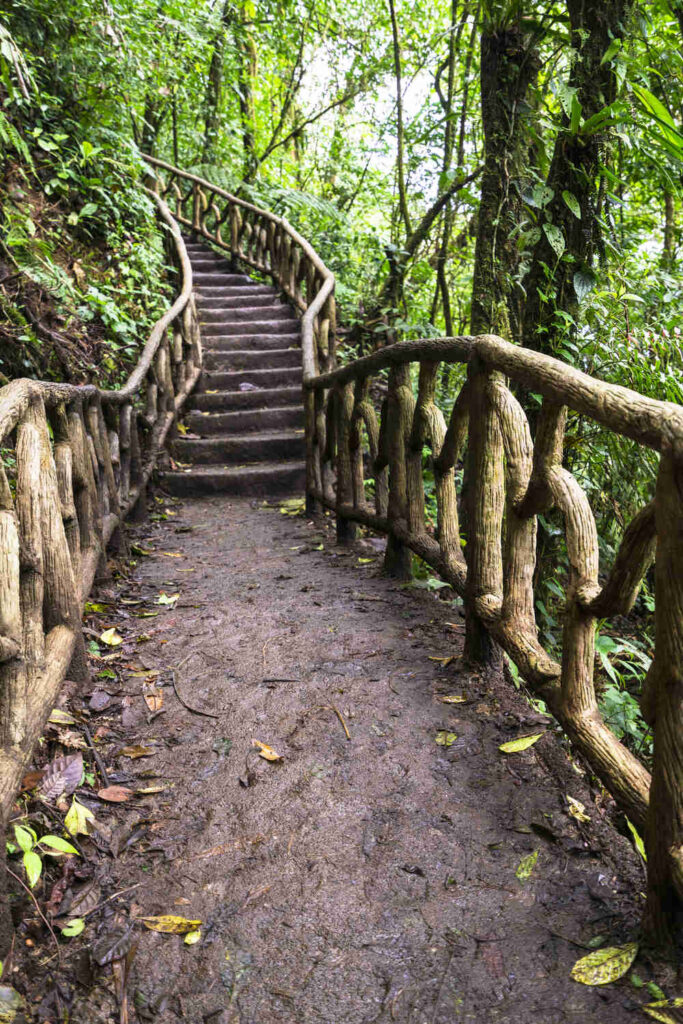
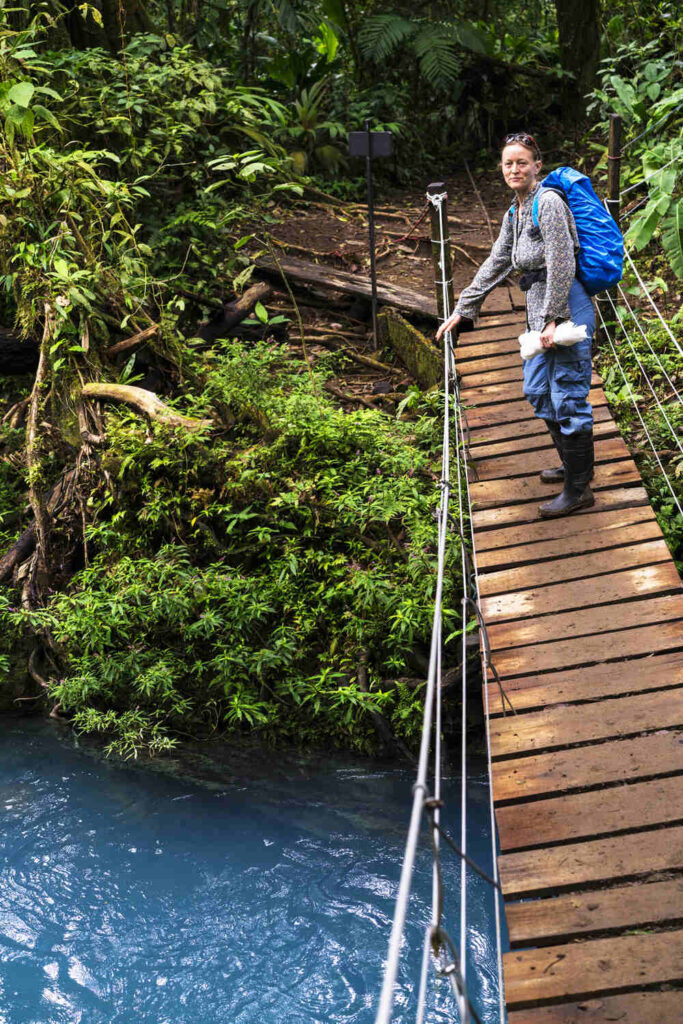
The first part is fairly easy with some paved paths, but as soon as you get deeper, expect dirt, rocks, and plenty of mud. In the rainy season, parts of the trail turn into a swampy mess. You’ll want proper hiking shoes, not flip-flops.
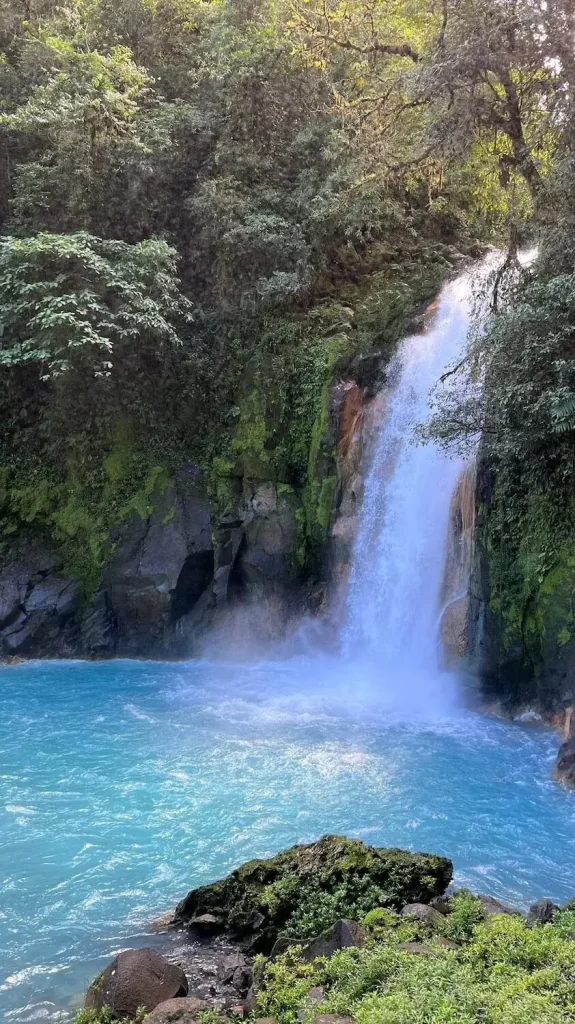
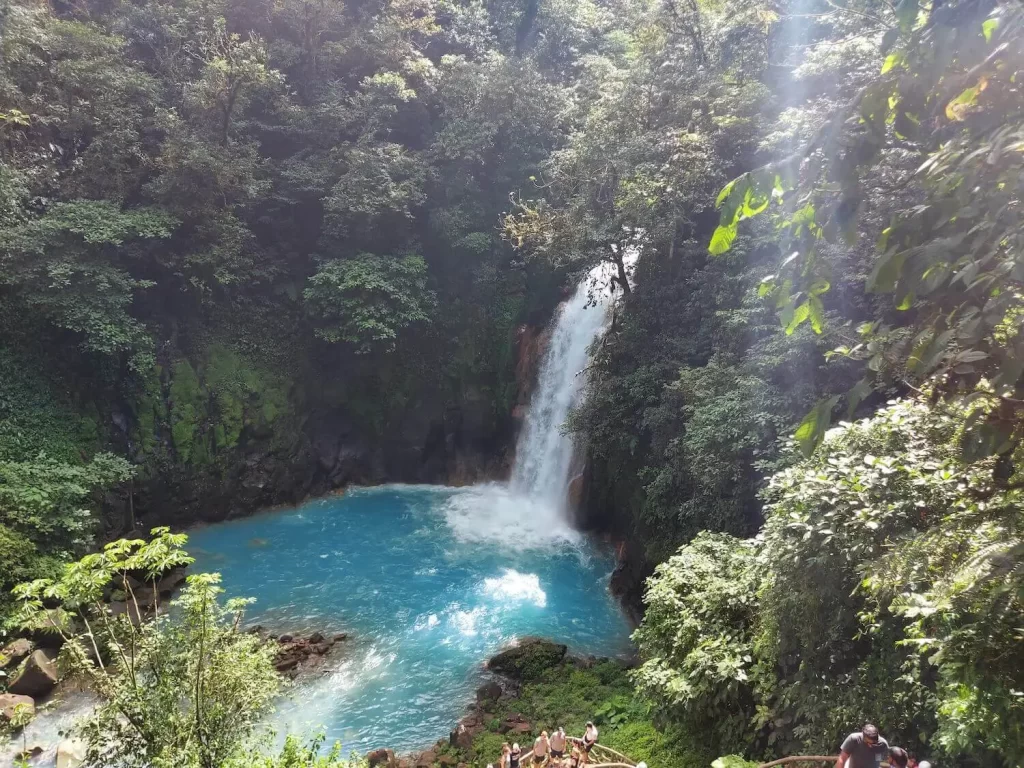
The most iconic stop is the Rio Celeste waterfall, of course. Once you get there, going down is fine; coming back up will leave you catching your breath. After the waterfall, you’ll pass bubbling thermal springs and the “Borbollones,” where gases bubble up from underground.
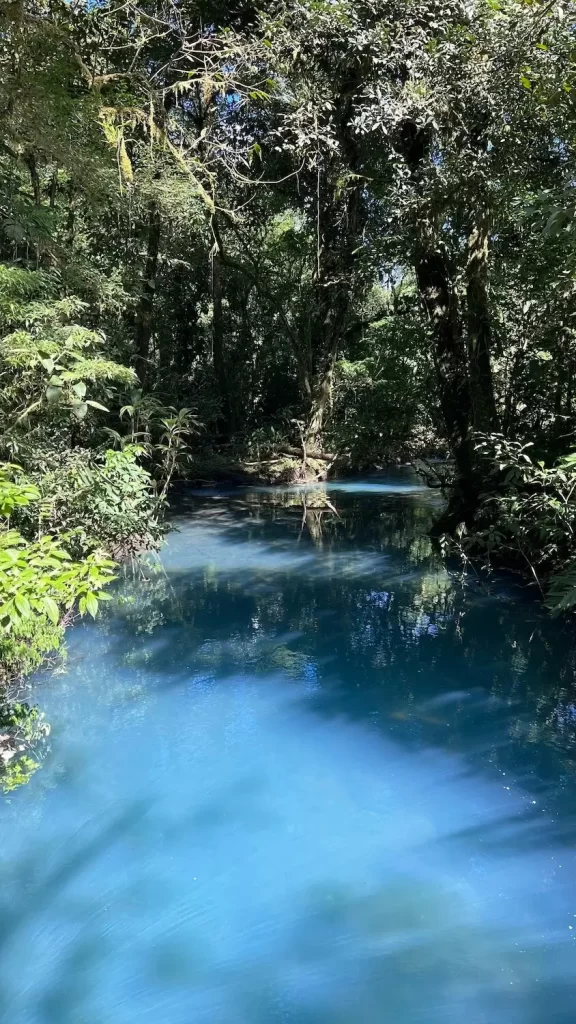
The highlight is Teñideros, where two clear rivers meet and instantly transform into that wild turquoise color. It’s a proper hike. Not brutal, but not easy either. Bring water, light snacks, and maybe a dry shirt. You’ll thank yourself later at the end of the trail.
Please note: You are not allowed to bring any plastic, and you will get checked upon entry at the national park, so remember that.
Guided Tour to Rio Celeste VS DIY
Deciding between a guided tour and going on your own really depends on what you value more: freedom or convenience. Doing it yourself gives you control. You can start early, take breaks whenever you feel like it, and avoid the big tour crowds.
Renting a car makes this doable, but keep in mind the last stretch of road near the park can be rough. A small sedan can handle it, but an SUV is way less stressful.
Costs to visit Rio Celeste La Fortuna Costa Rica, also add up. Entry, parking, and gas. though it still usually works out cheaper than a full tour.
Tours take the stress out of it entirely. Transport is included (no worrying about getting lost), guides share local knowledge about the plants, animals, and the science behind the river’s color. Packages even throw in lunch or extra stops at hot springs. Tours cost about $70, but if you calculate all the inclusions, that’s good value for money.
If you’re short on time or don’t love driving in Costa Rica, a tour makes more sense. But if you want to explore at your own pace and maybe save some cash, DIY is the way to go.
Tips and Rules at Rio Celeste Costa Rica
A few rules worth knowing before you go in:
- You won’t find paper maps, so follow the sign or the AllTrails app for the Rio Celeste hike
- There are no on-site facilities. The only bathroom is located at the national park entrance
- Single-use plastics and plastic bags aren’t allowed in the national park. We suggest bringing a reusable water bottle.
- Pets and strollers are not allowed in the park.
Restaurants Near Tenorio Volcano National Park
After hiking to the famous blue river, you’ll probably be starving. Luckily, there are a few great local spots not far from the park. Most are small family-owned places serving home-style Costa Rican food, so don’t expect anything fancy, just tasty and filling meals.
- Restaurant Tapirus Paradise Rio Celeste: Local Costa Rican food with big portions and fair prices. Try the casado with fish; it’s a favorite among locals.
- Soda River Blue: Simple and friendly spot right by the park entrance. Great for quick meals like gallo pinto, fried plantains, and fresh juice.
- Soda Y Rancho Doña Irma: Laid-back place surrounded by nature. They serve traditional dishes and homemade desserts.
There are no fast food chains anywhere near here. That’s fine, because everything is freshly cooked and better anyway.
Hotels Near Tenorio Volcano National Park
If you’re planning to stay overnight, there’s a good mix of eco-lodges and small hotels close to the park. If you want something upscale, there are options. If you just need a clean room after a long day, there are those too.
- Hideaway Rio Celeste Hotel: Upscale eco-lodge with private bungalows and direct access to trails. Perfect if you want something quiet and a bit fancy.
- Hotel Catarata Rio Celeste: Great mid-range option just minutes from the park. Comfortable rooms, on-site restaurant, and a relaxing garden area.
- Posada Río Celeste La Amistad: Budget-friendly and family-run, with clean rooms and friendly hosts who can help plan your day at the park.
Most places are surrounded by nature and mornings here start with birds and howler monkeys before anything else does. Of course, most people visit the waterfall as a day trip from La Fortuna, but these are good options if you want to stay longer and see the real Costa Rican countryside.
FAQ About Rio Celeste La Fortuna, Costa Rica
Rio Celeste looks unreal online, so we understand you want straight answers before you commit to the trip on your Costa Rica trip itinerary. Here’s a quick FAQ covering the basics.
What to Wear for Rio Celeste in Costa Rica?
Pack like you’re going to get muddy, because you will. Hiking shoes with grip are a must (don’t even think about sandals). Toss in a rain jacket, quick-dry clothes, and maybe an extra shirt for the ride back.
Bring water, snacks, and bug spray too. Cash is useful for parking and little sodas (try the pork skewers if the seller is there!) near the entrance. We’d also recommend a plastic bag for dirty shoes.
Are Drones Allowed at Rio Celeste?
Drones aren’t allowed inside Tenorio Volcano National Park. Rangers are strict about it, and for good reason, because the noise scares wildlife and kills the quiet for everyone else around you.
We once saw a couple of people try to sneak one in, and let’s just say it didn’t end well (confiscated on the spot). If you’re set on drone footage, you can fly outside the park in nearby areas, but don’t risk it at the falls, it’s not worth the fine.
How Many Waterfalls are in the Park Besides Rio Celeste?
Rio Celeste waterfall in Tenorio Volcano National Park is the main one.
And honestly, the only official waterfall you’ll see on the marked trail. The rest of the hike takes you to other cool features (the hot springs and Teñideros) but no more big cascades.
Some locals will tell you about hidden falls off-trail, but those areas aren’t safe or legal to enter. If you’re craving multiple waterfalls, you’re better off combining this trip with La Fortuna waterfall or Llanos de Cortes on another day.
Why is Rio Celeste so Blue?
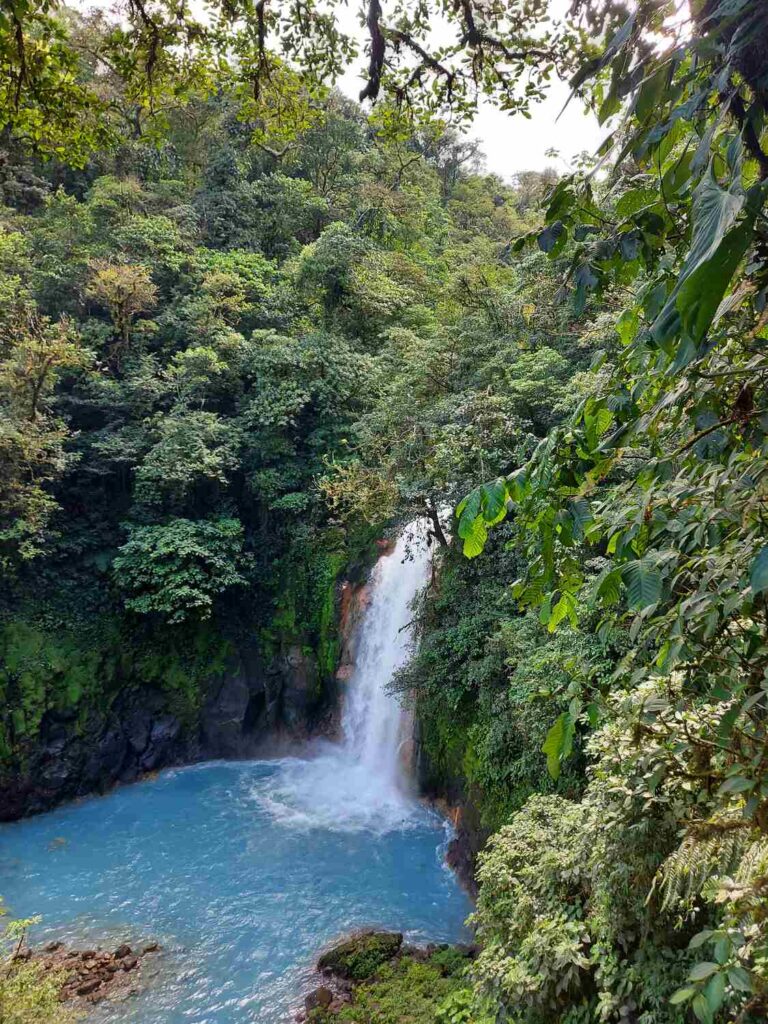
Two clear rivers meet at a spot called Teñideros. When their waters mix, the minerals create a crazy optical effect that makes the river look bright turquoise. It’s basically sunlight bouncing off tiny particles in the water.
On dry days, the color pops like something out of a cartoon. After heavy rain, though, the river can look brownish.
Can You Visit Rio Celeste From Liberia or Guanacaste?
Yes, but it’s a bit long. From Liberia, you’re looking at around 2 hours by car, maybe a little less if traffic is light. From the Guanacaste beaches (Tamarindo, Playas del Coco) it’s closer to 3 hours.
It’s doable as a day trip from La Fortuna, but you’ll be on the road a lot. Some tour companies offer pickup from those areas if you don’t want to drive. Our advice: if you’re staying in La Fortuna for a few days, do that instead. It’s way easier on your schedule.
Conclusion
Rio Celeste actually looks like the photos. The hike can be messy, the drive a bit long, and you’ll probably end up with mud on your clothes. But you can visit the waterfall with its bright blue water, and that’s worth it.
Just plan ahead. Check the weather, bring proper shoes, and don’t expect to swim at the falls. If you’re staying in La Fortuna, it’s an easy day trip. If a river that looks genuinely, impossibly blue is on your list, don’t skip this one on your Costa Rica trip for 10 days.