


Renting a Car in Costa Rica: Costs, Insurance and Tips
Renting a car in Costa Rica is the easiest way to see the country on your own schedule. But the price you see online is rarely the price you pay. The law requires third-party liability insurance on every rental, and most booking sites leave it out.
So a $20-a-day quote can turn into $40 or more at the counter. It’s not a scam, just how renting works here. Once you know the real costs, the paperwork and a few road rules, the rest gets a lot easier.
Share this article
In Short
- Third-party liability insurance is mandatory and adds about $13 to $25 a day.
- CDW is optional, and many travel credit cards cover it with a letter that names Costa Rica.
- A week with basic insurance costs $200 to $450 for a sedan in low season, and $400 to $650 in high season.
- A sedan is fine on the main paved routes, but Nosara, Santa Teresa and Monteverde in rainy season call for a 4×4.
- Your home license is valid for the stay stamped in your passport, up to 180 days.
Join Our Facebook Community
Still have questions or want local tips straight from our team? Join our Facebook community. That’s where we share updates, answer questions, and help you plan your Costa Rica trip the smart way.
Do You Need a Rental Car in Costa Rica?
Before anything else, it’s worth asking if you need a car at all. For a trip with three or more stops, a rental makes life much easier. The same goes for places like Monteverde, Nosara or the Osa Peninsula.
For a simpler trip, say La Fortuna and Manuel Antonio over a week, shared shuttles do the job. At $45 to $75 per person per leg, they save you the stress of mountain roads.
The math changes with group size. Two people taking four shuttles can easily spend $400 to $600 on transport. That’s about the same as a week’s rental with insurance in low season.
Skip the car if narrow, unlit roads make you nervous, or if most of your trip is beach time in one place. Shuttles are easy to book, and someone else handles the potholes.
Mandatory Car Rental Insurance in Costa Rica
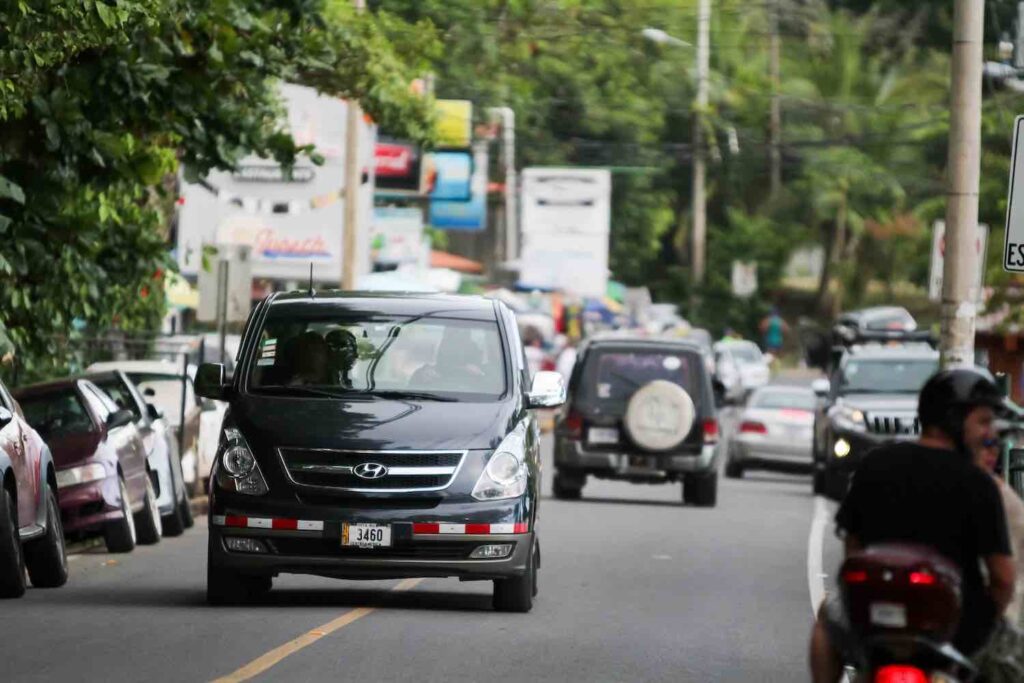
This is the part that confuses almost everyone. Costa Rican law requires every rental car to carry third-party liability insurance. It covers damage or injury you cause to other people and their property.
Each company gives it a different name: TPL, SLI, LP, ALI or Third Party Insurance. They’re all the same legal requirement. It costs about $13 to $25 a day, depending on the company and the size of the car.
You can’t decline it, and no credit card covers it, because it’s set by Costa Rican law. It’s also where the counter shock comes from, since most aggregator sites leave it out of the headline price.
When you get a quote, ask for the total with mandatory insurance included, in writing. A company that won’t give you that number upfront is a company to skip.
CDW and Credit Card Car Rental Coverage in Costa Rica
Collision cover is the optional part, and it’s where you can save money, or lose it. The collision damage waiver (CDW, sometimes called LDW) covers damage to the rental car itself.
Basic CDW costs about $9 to $24 a day and comes with a deductible, often around $750. Full cover adds glass and tires, removes most of the deductible and can drop the deposit to about $100 with some companies.
Plenty of travel credit cards cover CDW, so you can decline the company’s version. You’ll need a letter from your card provider that names Costa Rica. You’ll also face a bigger hold on your card, about $1,000 to $3,000.
Fair warning: no CDW covers river crossings, and driving on roads the company doesn’t allow can void it. Read that page of the contract before you sign.

How Much Does It Cost to Rent a Car in Costa Rica?
Weekly rates are the easiest way to compare, since daily prices online leave so much out. These ranges already include the basic mandatory insurance:
- High season sedan (4×2): $400 to $650 per week
- High season 4×4 SUV: $650 to $1,200 per week
- Low season sedan (4×2): $200 to $450 per week
- Low season 4×4 SUV: $300 to $750 per week
High season runs December to April, plus July. Christmas, New Year and Easter week cost the most, and 4x4s sell out first, so book those dates early.
On top of that, budget for fuel. Gasoline costs about ₡800 a liter, around $1.75. The price changes every month. Some companies, including Alamo and Enterprise, also add an airport fee of up to 13%.
Extra drivers, car seats and one-way drop-offs can all cost extra. Ask for them in the quote rather than at the counter.

Sedan, SUV or 4×4 in Costa Rica?
The right car depends on your route more than anything else. A sedan is fine for the main paved routes. That means San Jose to La Fortuna via San Ramón, Manuel Antonio, and Uvita on the coastal highway. It also covers Tamarindo or Liberia in Guanacaste.
A high-clearance SUV is the safe all-rounder, since potholes and short gravel stretches turn up even near tourist towns.
A 4×4 matters for Monteverde in rainy season, Nosara, Santa Teresa, the Osa Peninsula and lots of hillside eco lodges. That’s especially true May through November, when dirt roads turn to mud.
One thing no insurance covers is water damage. When a river crossing looks deep or fast, wait for it to drop or turn around. It’s never worth the repair bill.

Planning Your Route?
Our 1-week itinerary covers La Fortuna, Monteverde and Manuel Antonio, with drive times between each stop.
Rather skip the driving? Our San José to La Fortuna guide covers shuttles and buses.
Documents You Need to Rent a Car in Costa Rica
The paperwork is simple, but the counter staff will check every piece. Bring these three things:
- Your passport, with the entry stamp from your arrival
- A valid driver’s license from home in the Latin alphabet, or an International Driving Permit alongside it
- A credit card in the main driver’s name for the deposit
Under Costa Rica’s traffic law, a foreign license is valid for as long as the stay stamped in your passport. That can be up to 180 days. Some companies also want you to have held your license for one or two years.
The minimum age is 21 at most big brands, with a young-driver fee up to age 24. A few local companies rent from 18, and some start at 23. Only a handful accept debit cards for the deposit, so bring a real credit card.
Car Rental Scams in Costa Rica and How to Avoid Them
Most rental companies here are honest, but a few tricks come up often enough to watch for. The first is the too-cheap quote, a $5-a-day deal on a booking site that triples once insurance and fees land. If one price looks far lower than the rest, it’s missing something.
The second is “or similar”, where you book a 4×4 and get handed a 2WD. Ask for the car class and 4×4 in writing, and refuse a swap that doesn’t suit your route.
The third, and most common, is a damage claim for scratches that were already there. Before you leave the lot, film a slow walk around the car, including the roof, bumpers, tires, windshield and interior.
Check the spare tire and jack while you’re at it. It takes five minutes. When you return the car, ask for a signed form saying it came back in good condition.
Driving Rules and Tips for Costa Rica
Driving here is fine once you adjust to a slower pace. Speed limits are lower than many people expect. You’ll see 25 km/h near schools, 40 in towns and 60 on rural roads. Main highways allow 80 to 100.
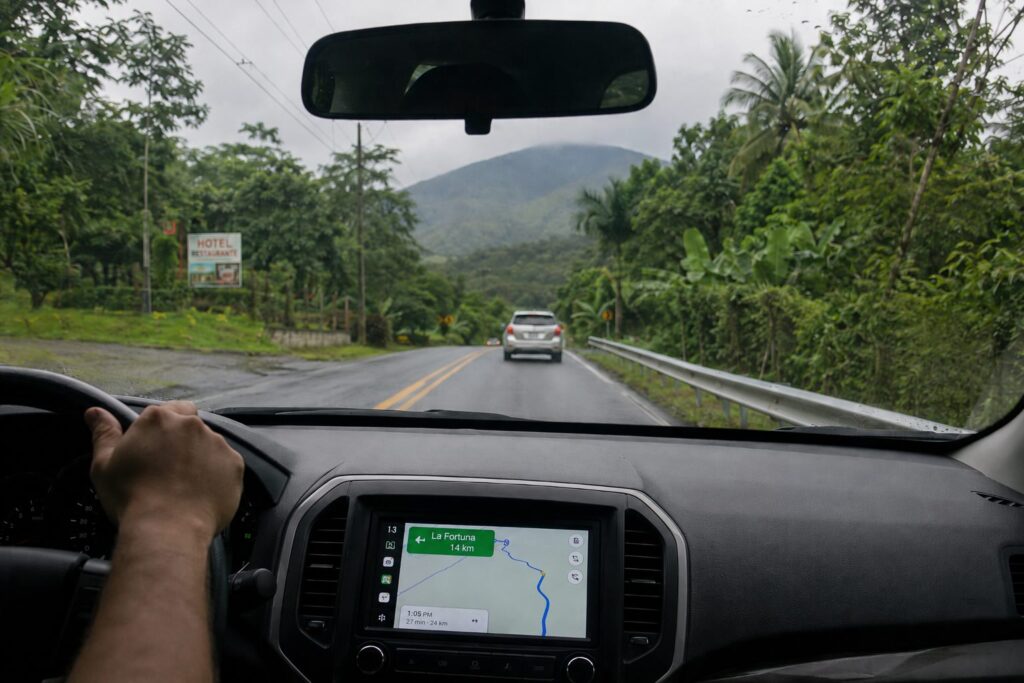
Use Waze. Locals update it with crashes, closures and police checks, and it handles rural roads better than Google Maps. Tolls on Route 27 take cash or card.
At one-lane bridges, a “Ceda el Paso” sign means you give way to oncoming cars. Gas stations are full service, so stay in the car. Ask the attendant for “lleno con regular, por favor” for a full tank.
Avoid driving after dark outside towns. The sun sets around 5:15 to 6 PM, depending on the month, and potholes, cyclists and unmarked speed bumps are hard to spot. And never leave anything visible in a parked car, even for a quick stop.
What to Do After a Car Accident in Costa Rica
Nobody wants to need this section, but it’s good to know before you drive. After any accident, call 911 and your rental company straight away, and follow their instructions.
In most cases, they’ll ask you to stay with the car until the traffic police and an insurance inspector arrive. That can take a while. Don’t move the car unless you’re told to.
Take photos of everything: both cars, the plates, the road and the other driver’s license. Don’t sign anything in Spanish you don’t understand, and don’t agree to pay anyone cash on the spot.
For breakdowns and flat tires, call the roadside number on your contract or on the sticker in the car. If a company later charges your card for damage you didn’t cause, dispute it with your card issuer. Send your pickup video as proof.
Should You Rent a Car in Costa Rica?
Rent a car when your trip has three or more stops, or takes you somewhere shuttles don’t go easily. Think Monteverde, Nosara or the Osa Peninsula. Pick a high-clearance SUV for most routes, and a 4×4 for rainy season or rough roads.
Book with a company that shows the mandatory insurance in its quote. Buy the CDW unless you have a card letter that names Costa Rica, and film the car at pickup.
Skip the rental for a two-stop trip, or when night driving and mountain roads make you uneasy. Shuttles cost less than you’d think for one or two people.
Still planning the route? Our 1-week Costa Rica itinerary and tips for visiting Costa Rica are a good next read.
Renting a Car in Costa Rica FAQ
Is Insurance Mandatory When Renting a Car in Costa Rica?
Yes, insurance is mandatory when renting a car in Costa Rica. The law requires third-party liability insurance, sold as TPL, SLI, LP or ALI depending on the company. It costs about $13 to $25 a day.
You can’t decline it, and credit card coverage doesn’t replace it. The collision damage waiver (CDW) is optional, and many travel credit cards cover it with a letter that names Costa Rica.
How Much Is the Deposit for a Rental Car in Costa Rica?
The deposit for a rental car in Costa Rica depends on the insurance you buy. With the company’s basic CDW, expect a hold of about $750 to $2,500 on your credit card. Full coverage can bring it down to around $100.
Decline CDW and rely on your credit card instead, and the hold jumps to about $1,000 to $3,000. It’s released after you return the car, which can take up to a week.
Can I Use My Driver’s License in Costa Rica?
You can use your home driver’s license in Costa Rica for as long as the stay stamped in your passport. Under Costa Rica’s traffic law, that’s up to 180 days.
The license must be valid and in the Latin alphabet. Otherwise, bring an International Driving Permit too. Some rental companies also ask that you’ve held your license for at least one or two years.
Do I Need a 4×4 to Drive in Costa Rica?
You don’t need a 4×4 for every Costa Rica trip. A sedan handles the main paved routes to La Fortuna, Manuel Antonio, Uvita and Tamarindo.
A 4×4 makes sense for Monteverde in rainy season, Nosara, Santa Teresa and the Osa Peninsula. It also helps for hillside lodges with steep dirt access roads. That’s especially true May through November. A high-clearance SUV is a good middle ground for most trips.
Can I Drive at Night in Costa Rica?
You can drive at night in Costa Rica, but it’s best avoided outside towns. The sun sets around 5:15 to 6 PM, depending on the month, and rural roads rarely have streetlights, painted edges or guardrails.
Potholes, cyclists, animals and unmarked speed bumps are hard to spot in the dark. Plan long drives so you arrive before sunset, and keep night trips to short runs around town.
Why Is the Online Quote Cheaper Than the Counter Price?
The online quote is cheaper than the counter price because most booking sites leave out the mandatory insurance. Costa Rica’s third-party liability coverage adds about $13 to $25 a day.
Airport fees of up to 13%, extra drivers and optional CDW can push the total higher still. Ask the company for an all-in quote with mandatory insurance, taxes and fees before you pay anything.
More Tips Before You Go?
Our tips guide covers seasons, entry rules, cash, wildlife safety and the little things first-timers miss.
Not sure when to go? See our best time to travel to Costa Rica guide.