

Ultimate 10 Day Costa Rica Itinerary for 2026
Ten days, four regions, and enough variety that you won’t see the same environment twice.
Costa Rica dropped its military in 1948 and put the money into schools, hospitals, and parks instead. It now protects close to 30% of its land. That one call is basically why this trip exists.
Ten days in Costa Rica get you four genuinely different places. San José first, a capital worth a proper look rather than the usual quick pass-through. Then La Fortuna, a small town built around a volcano that ran nonstop for 42 years before going quiet in 2010. After that, Monteverde, a cloud forest cool enough to make its own weather, runs at a completely different pace to everything else on this list.
Finally, Manuel Antonio, where the national park and the beach share the same fence line, and the monkeys will steal your lunch if you’re not paying attention. Let’s get started, this is the ultimate itinerary for 10 days in Costa Rica.

10-Day Costa Rica Itinerary
Here’s how the 10 days break down. San José first, then La Fortuna, Monteverde, Manuel Antonio, and a loop back through some quieter spots near the capital. Stick around for the FAQ at the end too, as it covers a few things worth knowing before you go.
Day 1 – Arrive in San José & Explore the City
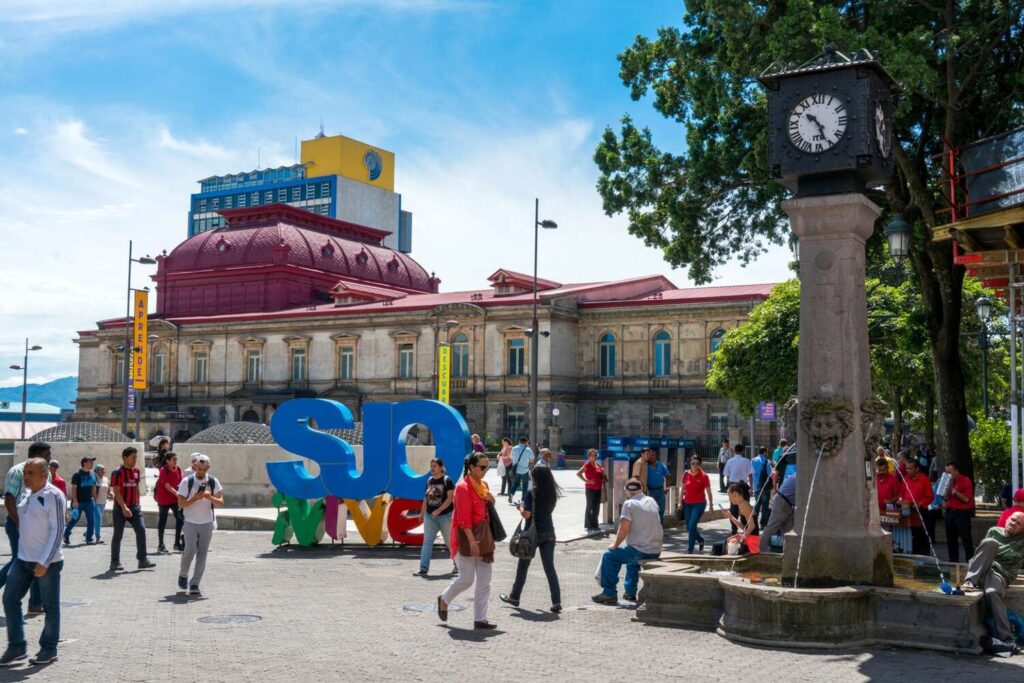
Day 1 is San José, the capital city and the bookend of this whole trip. You won’t need more than a full day in San José, but make it count: a market lunch, a pick between two great museums, and dinner in the city’s best food neighborhood. Get a SIM card sorted first, then go explore the city center on foot.
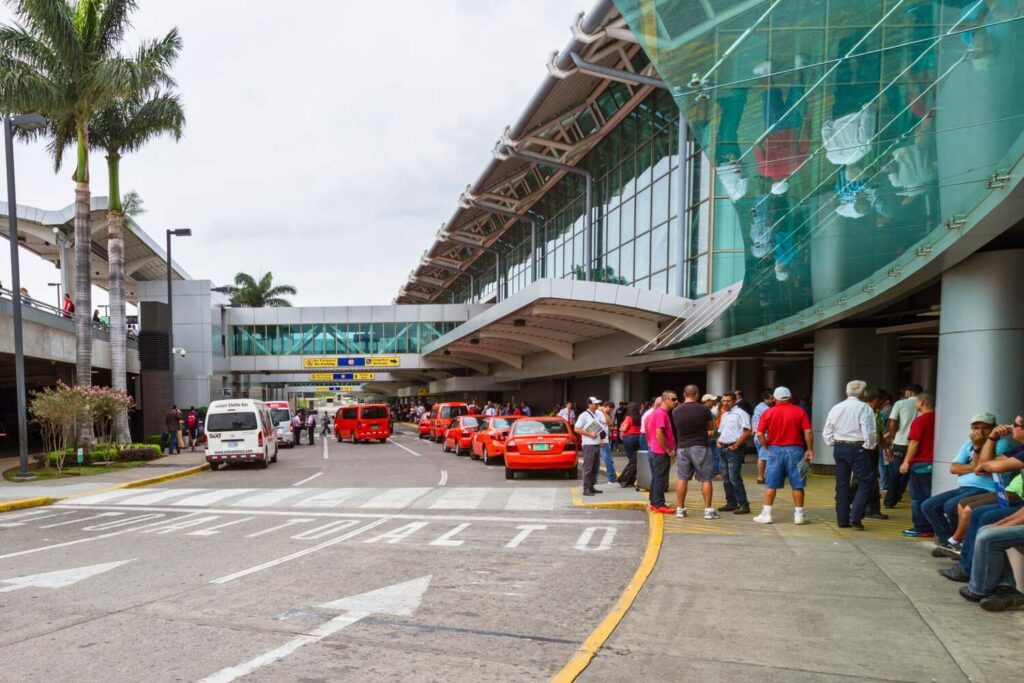
Land at Juan Santamaría International Airport (SJO)
Your flight lands at Juan Santamaría International Airport, code SJO, located in Alajuela, about 20 minutes from downtown San José rather than in the city itself.
Skip the currency exchange counters near baggage claim; the rate is weak, and an ATM inside the terminal gets you a far better deal on colones. For a SIM card, the three real options are Kolbi (state-run, the best rural coverage by far), Claro, and Liberty, the company that used to be called Movistar.
Airport kiosks open and close depending on the week, so an eSIM bought online before your flight is the safer move if your phone supports it. Bring your passport either way, since every SIM gets registered with your name attached. A taxi or rideshare into San José runs 25 to 35 minutes depending on traffic, and most hotels will arrange a driver for you ahead of time.
Got questions about Costa Rica? Join our community on Reddit for real tips.
Planning a trip to Costa Rica? Join our Facebook group for insider tips.
Have a Meal at Mercado Central
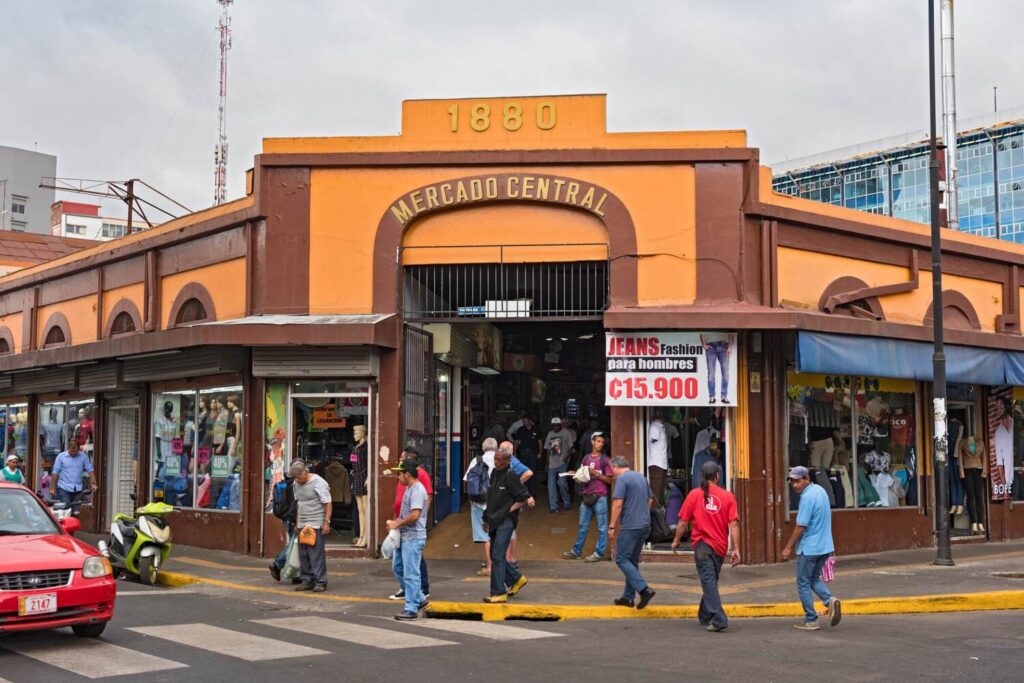
The Central Market has been serving food since 1880, and it’s still the best lunch stop in the city. It’s open Monday through Friday from 6:30 AM to 5:45 PM, Saturday until 6 PM, and closed on Sundays, so plan your visit around those hours.
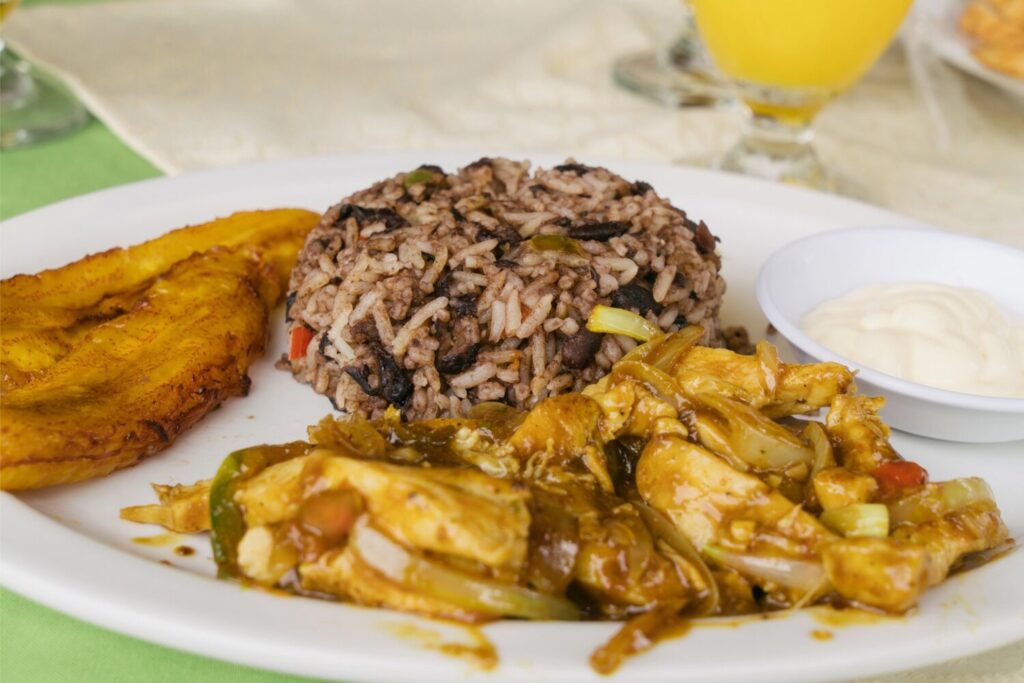
Inside, over 200 stalls sell produce, spices, and small family-run “sodas,” the local word for a casual eatery. Order a casado, the everyday plate of rice, beans, plantain, salad, and your choice of meat or fish, or go for olla de carne, a hearty beef and vegetable stew that’s been on the menu at some stalls since the early 1900s.
Soda Tala does a version of gallo pinto called “talapinto,” wrapped in a banana leaf with cheese and plantain on the side. For something cold and sweet after, find La Sorbetera de Lolo Mora, a 100-plus-year-old ice cream stand that’s only ever sold one flavor: a cinnamon-spiced cream. Bring cash. Most stalls don’t take cards.
Visit the National Theater or the Gold Museum
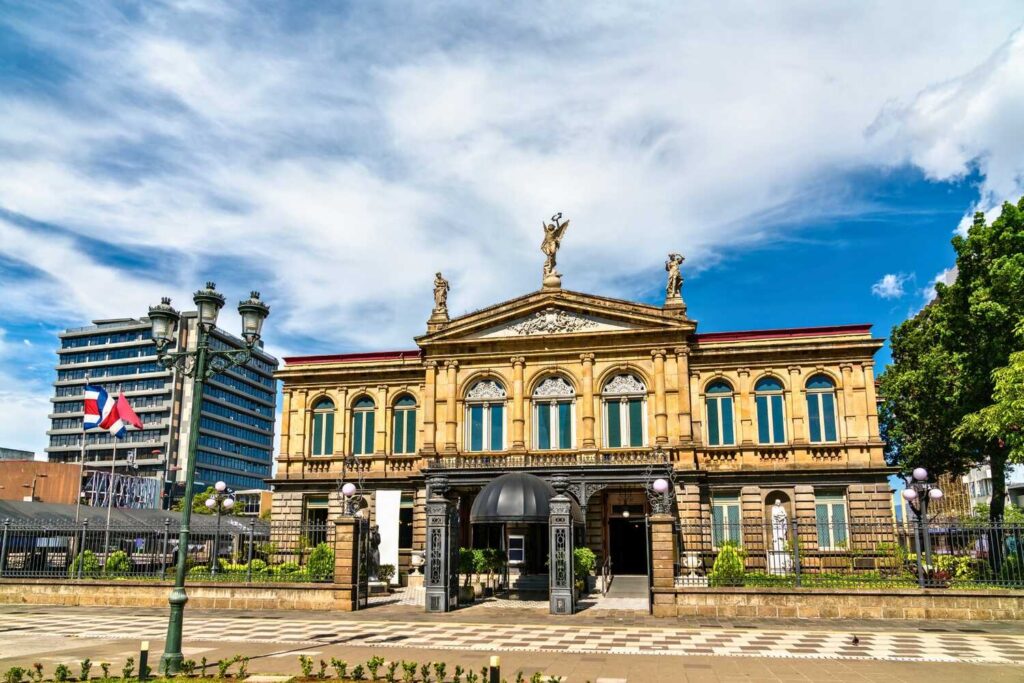
San José has two of its best museums within a five-minute walk from each other, so pick one for Day 1 and save the other for your last day in the city. The National Theater, built in 1897 with money from a coffee export tax, runs guided tours in English or Spanish every hour from 9 AM to 4 PM daily.
Entry costs about 3,500 colones, roughly $7, for foreign adults, and kids under 12 get in free. Look up at the ceiling mural inside; it shows coffee and banana exports, though the painter, who’d never left Europe, accidentally gave the banana leaves the wrong shape.
The Gold Museum is underground, built beneath Plaza de la Cultura, and holds Costa Rica’s pre-Columbian gold collection across three connected exhibits. It’s open daily from 9:15 AM to 5 PM, and entry runs about $16 for foreign adults, with discounts for students. Both spots take cards, and both are an easy walk from Mercado Central.
Walk through Barrio Escalante for Dinner
End the day in Barrio Escalante, the neighborhood locals point to when you ask where to eat in San José. The center of it all is Calle 33, nicknamed the “paseo gastronómico,” with more than two dozen restaurants packed into a few blocks.
Al Mercat works with local farms for a menu that changes by season, while Isolina puts a modern spin on classic Tico dishes like tamales and rice with seafood. If you want something more casual, Jardín de Lolita is an open-air food court built from old shipping containers, good for burgers, sushi, or a local beer while you watch the evening crowd roll through.
The whole neighborhood centers on Parque Francia, a small park worth a slow lap before or after you eat. Most restaurants here run from late morning until around 10 PM, and reservations on weekends help, especially at the smaller spots.
Day 2-4: Head to La Fortuna & Arenal
The next three days are in La Fortuna, the small town below Arenal Volcano. This is the part of the country that built Costa Rica’s outdoor reputation: hot springs, waterfalls, hanging bridges, and a volcano you can hike around. Spread these activities across your three days based on energy and weather, since mornings tend to bring the clearest skies.
Travel from San José to La Fortuna
The drive from San José to La Fortuna covers about 130 kilometers and takes three to four hours, depending on which route you take and how much traffic builds up around the Central Valley. The roads are fully paved the whole way, so a standard rental car handles it fine; no 4×4 needed for this leg.
If you’d rather skip the driving, shared shuttles connect San José hotels directly to La Fortuna for somewhere around $15 to $20 per person, and most pick you up right from your hotel lobby.
Public buses run the route too, but expect a slower ride with a transfer along the way. Whichever way you go, build in stops: the drive climbs through cloud-covered mountains and coffee country before dropping into the flatter, greener terrain around Arenal, and a few viewpoints along the way are worth five minutes out of the car.

Take in the Views of Arenal Volcano
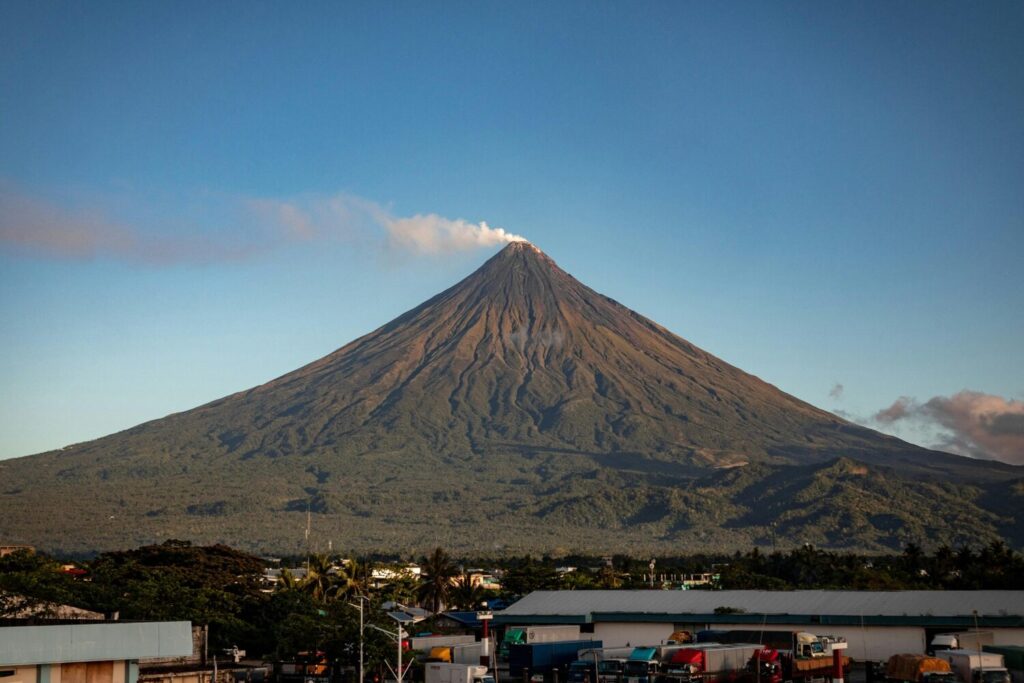
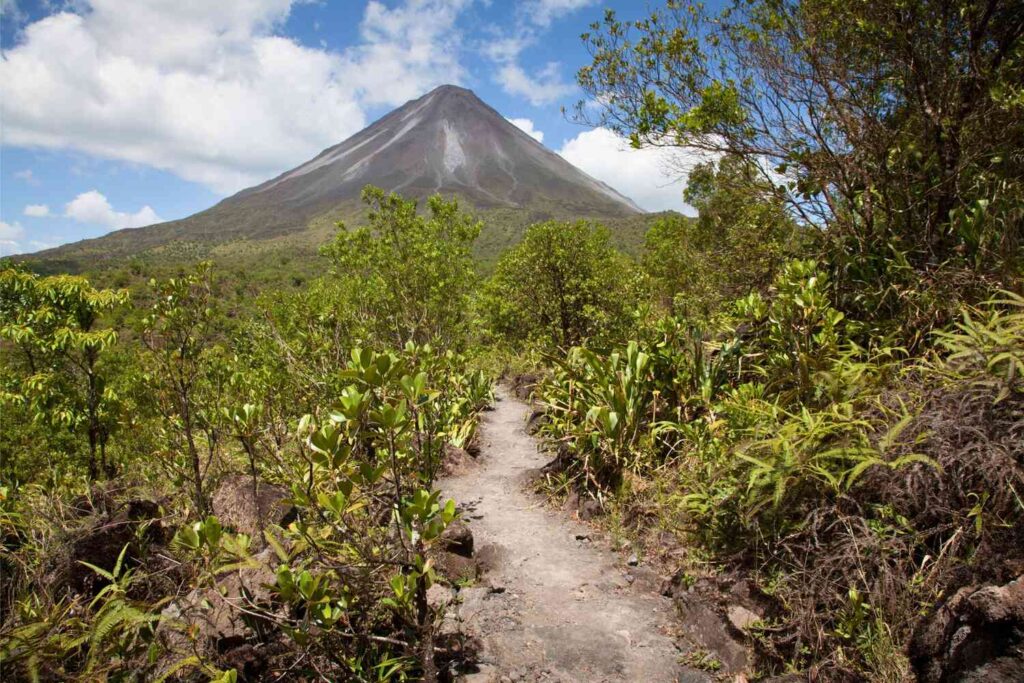
Arenal Volcano rises 1,633 meters above the surrounding plains in a near-perfect cone shape, and most of your days in La Fortuna will include at least one clear shot of it, weather depending. The volcano stayed active with visible lava flows from 1968 until 2010, when it went quiet, but the cone and the old lava fields are still the main reason people plan a trip here at all.
For a free view, the town’s central park gives you a clear shot on a good day, and several restaurants and hotels along Route 142 build decks specifically to catch the volcano at sunset.
Clouds tend to clear in the early morning and again right before dusk, so time your best photo attempts around those windows rather than the middle of the day. Bring a zoom lens or binoculars, since the cone looks closer than it actually is; you’re still several kilometers from its base.
We highly recommend joining tours to the Arenal Volcano from La Fortuna, which could be either hiking trails, ATV rides, or more.
Relax in Hot Springs (Tabacón, Baldi, or El Chollín)
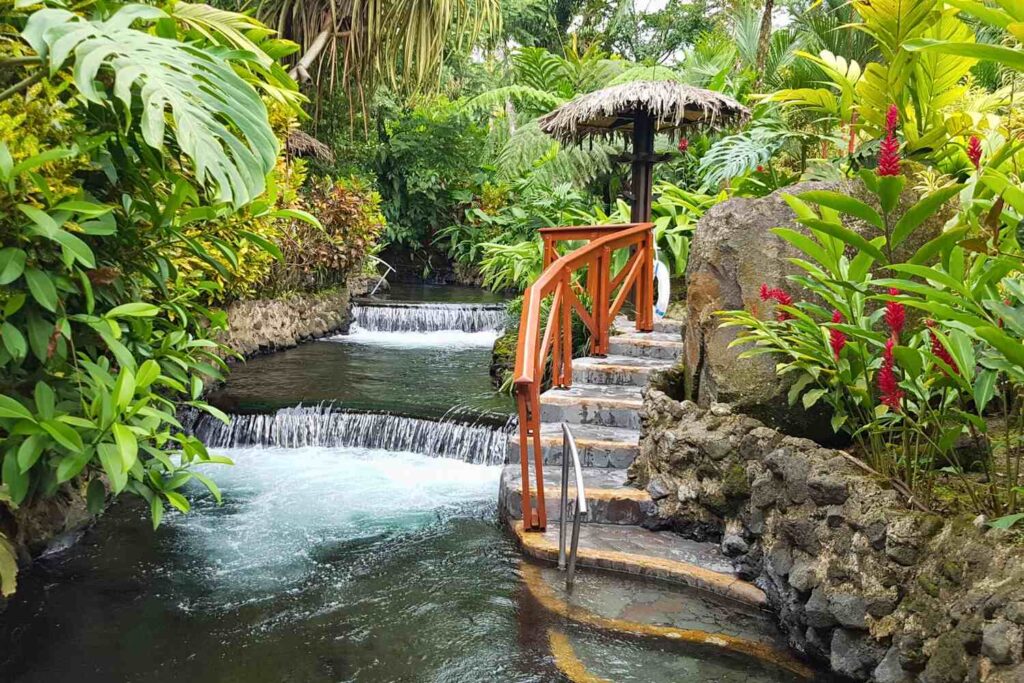
La Fortuna runs on volcanic heat, and there are three choices depending on budget. Tabacón is the upscale pick: a day pass without a meal runs about $99 per adult, or $168 with lunch or dinner included, and the grounds stretch across a private reserve with pools set into a real river warmed by the volcano, open from 10 AM to 10 PM.
Baldi is the mid-range, family-friendly option, with 25 pools at different temperatures plus waterslides, open from 9 AM to 10 PM and running closer to $40 to $50 per adult.
Then there’s El Chollín, also called Rio Choyín, a completely free natural hot river just past the entrance to Tabacón.
There aren’t any facilities, no ticket booth, just warm water and rocks. Park up the road and walk down rather than paying the unofficial “parking guards” who hang around the entrance, and bring water shoes since the rocks get slick. Go right at sunset for the best version of this one.
Take a Day Trip to Rio Celeste Waterfall
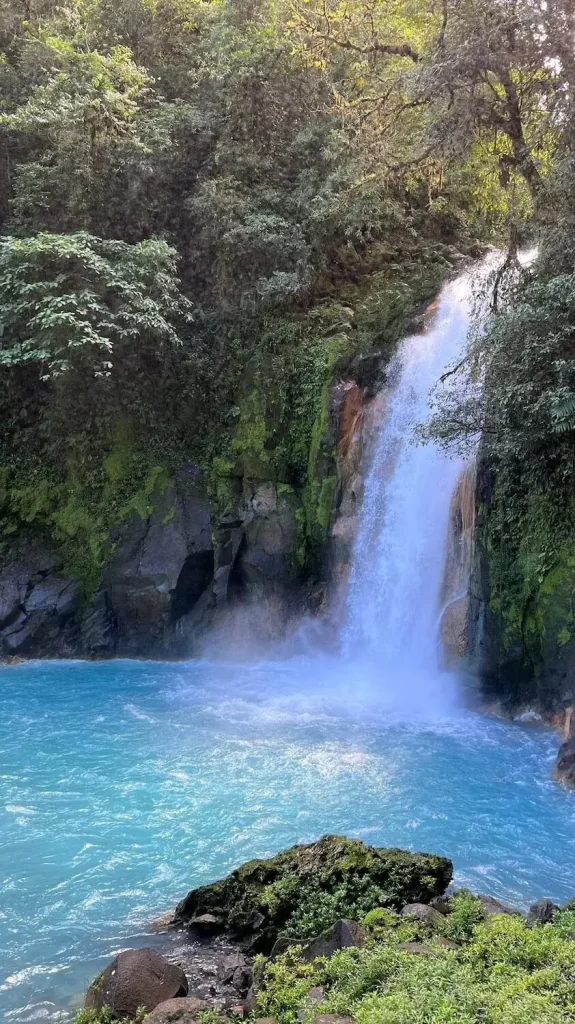
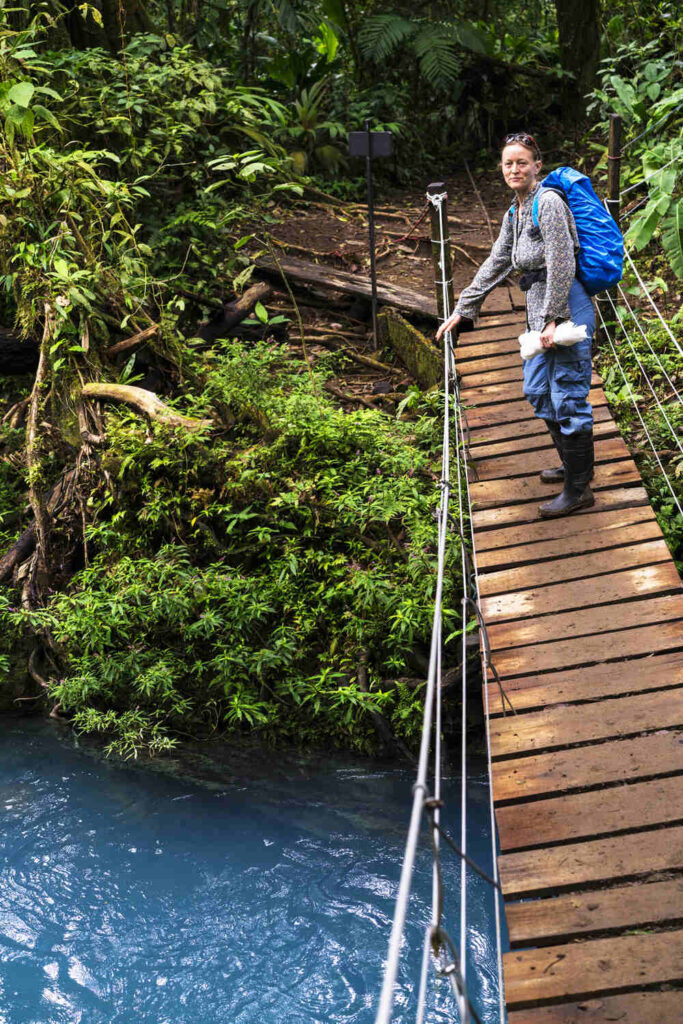
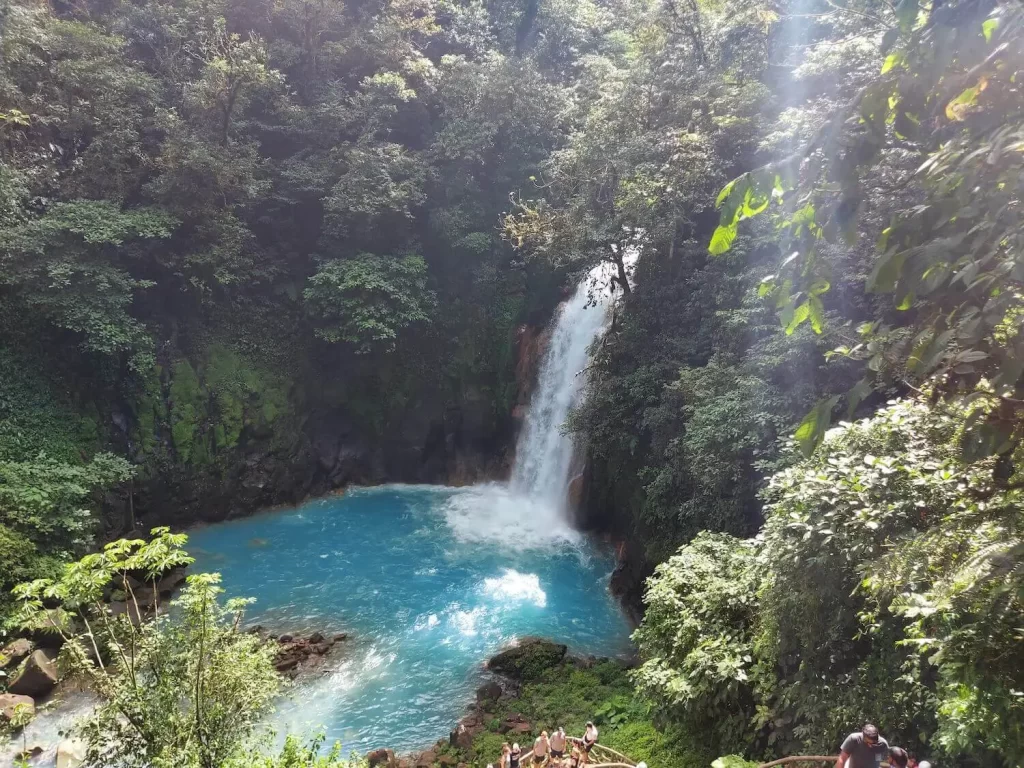
Rio Celeste, inside Tenorio Volcano National Park, is worth the detour even though it’s about two hours from La Fortuna. The water gets its bright blue color from minerals coating the riverbed, not from anything dissolved in the water itself, and the effect is strange enough that it’s worth seeing in person.
Entry costs $12 per adult plus tax, $5 for kids, and you have to book a specific entry time online through the SINAC website in advance; there are no tickets sold at the gate. The park opens at 8 AM and lets people in until 2 PM, even though it stays open until 4 PM, so build your day around that window.
The hike to the waterfall and back covers around six kilometers and takes most of a morning. One thing to know before you go: swimming isn’t allowed anywhere in the park, and the viewing platform now keeps a distance from the falls after a past accident, so you’ll get a good look rather than a close one.
Walk Around Lake Arenal for Sunset
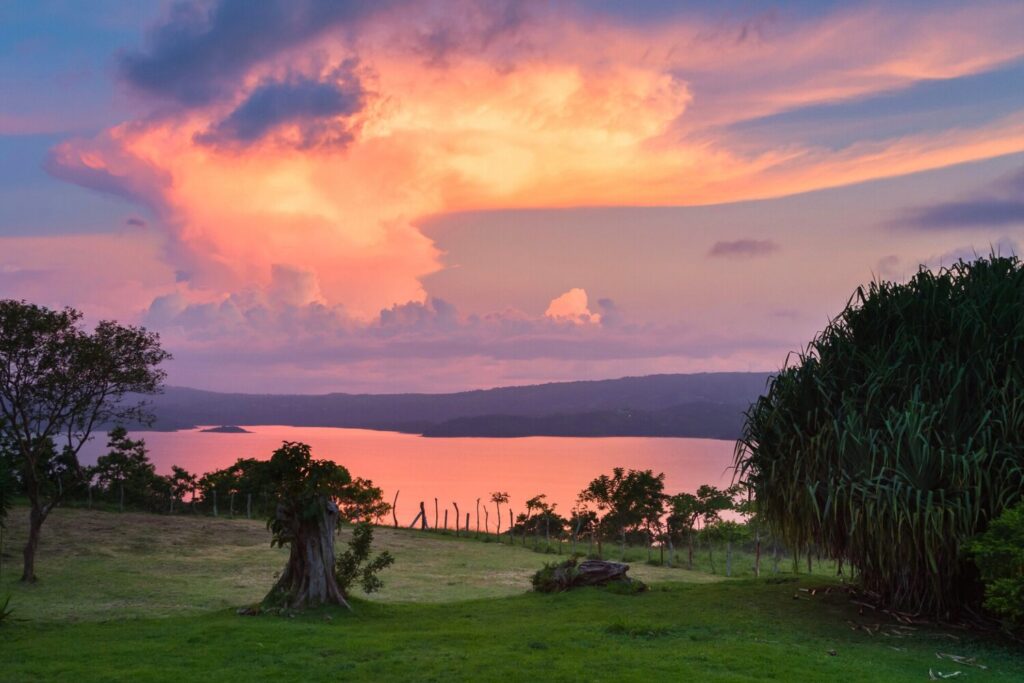
Lake Arenal didn’t exist in its current form until 1979, when a hydroelectric dam tripled its size and put two whole towns underwater in the process, and remnants of both still rest below the surface.
These days, it’s the biggest lake in the country and a serious windsurfing destination in Central America, but for your purposes, it’s mainly about the view. Drive or get dropped along the southern shore road in the late afternoon, and you’ll catch the volcano reflected in the water just as the light turns gold, assuming the clouds cooperate.
A few lakeside restaurants and cafés have decks built for exactly this moment, so grab a coffee or a beer and settle in for half an hour. The drive around the lake also passes small farms, a handful of wineries, and quiet pull-offs where you can stop without a crowd.

Hike the Arenal 1968 Volcano Trail
This private reserve takes its name from the 1968 eruption that buried two towns under lava and ash, and the trail now runs straight through that old flow. Entry costs $25 per adult and $15 for kids, with the gate open daily from 8 AM to 5 PM and no reservation required ahead of time.
Two trail options start at the entrance: a shorter loop through the lava field itself, about an hour and a half round trip, or a longer route that adds a forest section and a small lake. Either one ends at a viewpoint with a straight shot at the volcano’s cone and Lake Arenal below it, assuming the clouds stay away.
Wear real shoes here, not sandals; the lava rock is sharp and uneven in places, and there’s a fair bit of walking on loose ground. Morning visits give you better odds of a clear volcano view than afternoon ones.
Visit La Fortuna Waterfall
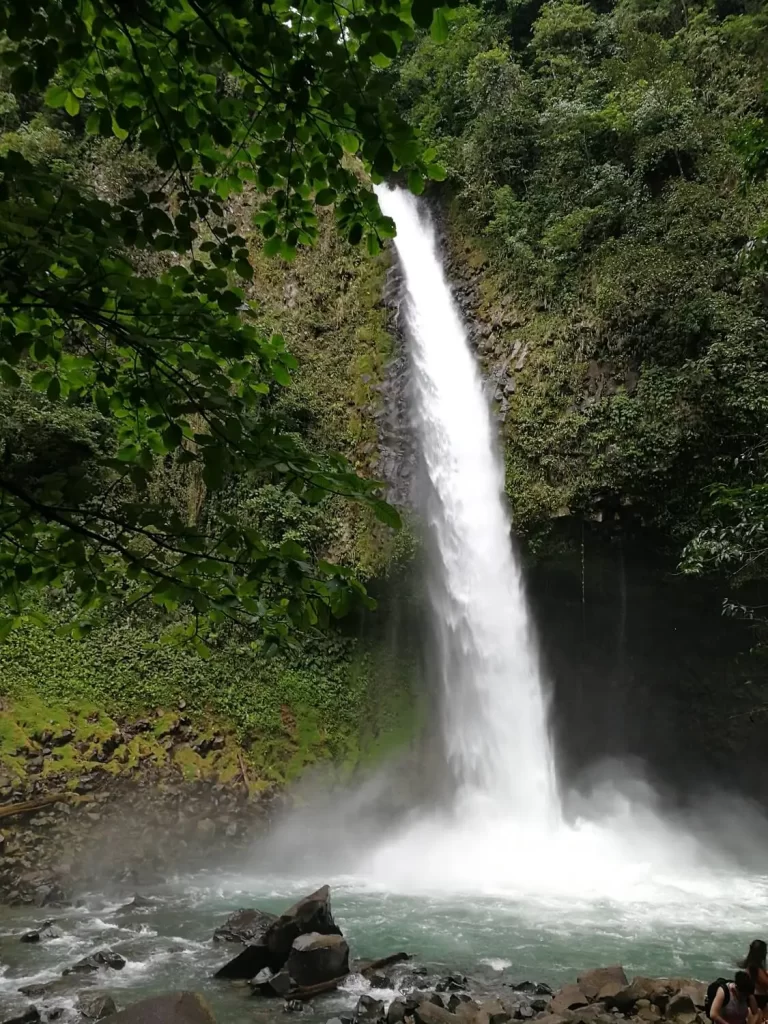
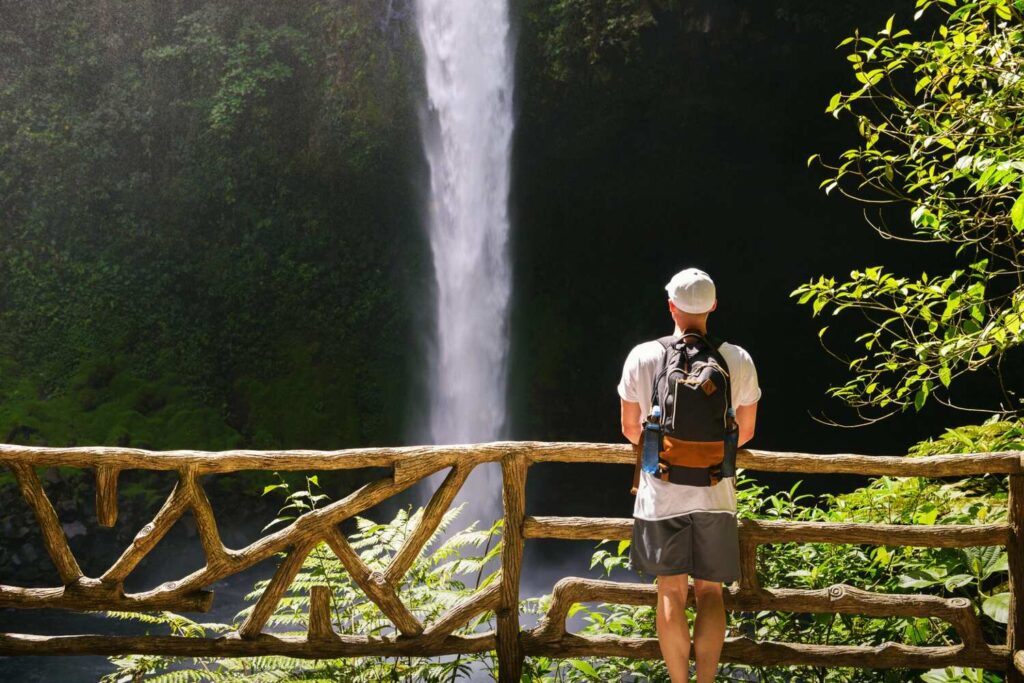
This 70-meter waterfall drops into a bright pool a short drive from town. Entry runs around $18 to $20 per adult and $5 for kids, with the park open from 7 AM to 5 PM, last entry usually around 3 or 4 PM.
Getting down to the water means descending more than 500 steps cut into the hillside, which takes about 15 minutes; the walk back up takes closer to 30, with rest benches every so often along the way.
You can swim in the calmer pools downstream, though the area right under the falls has a strong current and isn’t safe for it. Water shoes help a lot here, since the rocks at the base get slippery fast. Go early, before 9 AM if you can, to beat the tour buses and get the place close to yourself.
Explore the Mistico Hanging Bridges
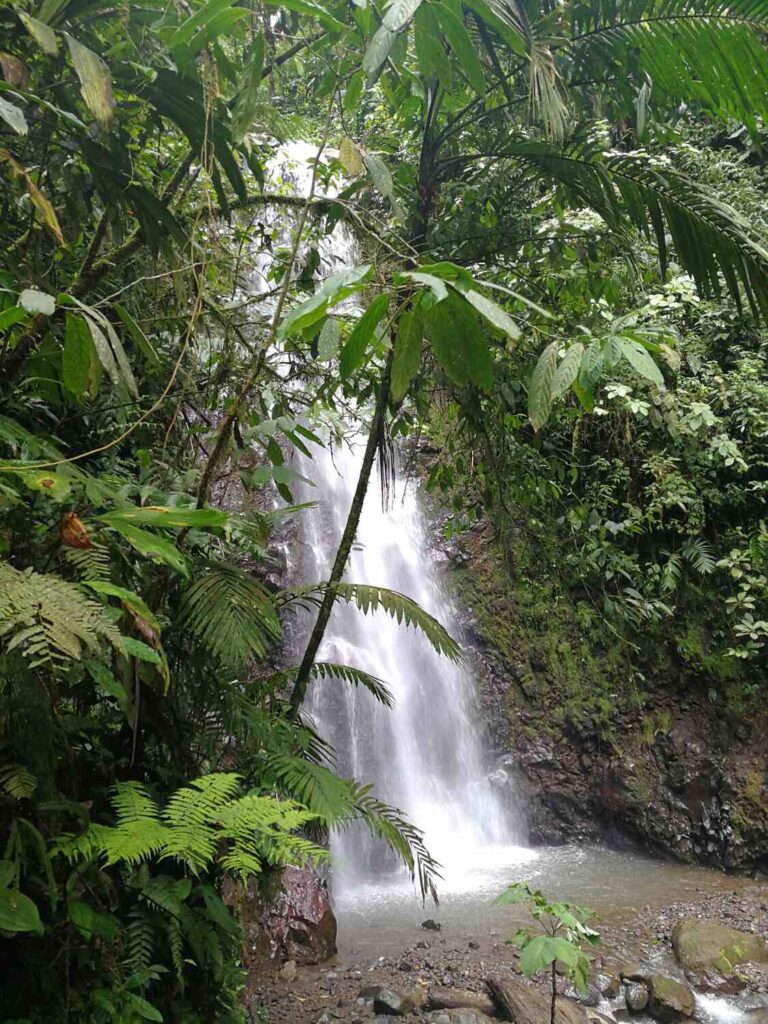
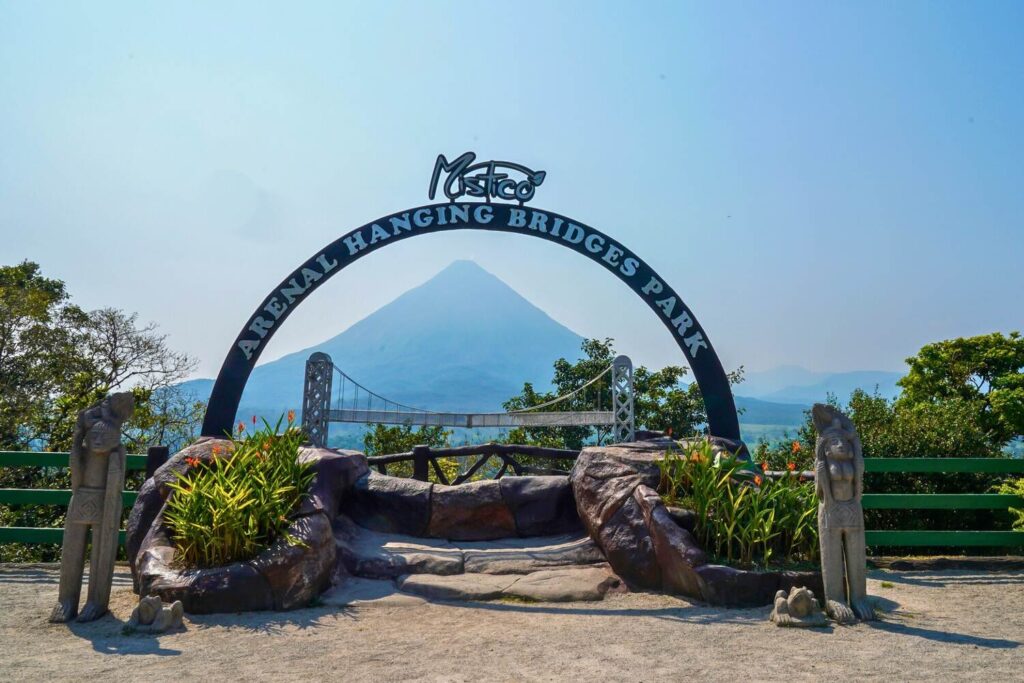
The Mistico Arenal Hanging Bridges Park covers about 600 private acres west of La Fortuna, with a trail that crosses six suspension bridges and nine fixed ones through working rainforest. Self-guided entry runs around $30 to $32 per adult, and the park opens at 6:15 AM and closes ticket sales at 3:50 PM, with early morning being your best shot at spotting wildlife before the heat picks up and the animals settle into the shade.
The full loop covers about three kilometers and takes most people one and a half to three hours, depending on how often you stop. Howler and white-faced monkeys, sloths, and a long list of bird species all live in this stretch of forest, so bring binoculars even if you don’t plan to use the guided tour option. Book your ticket online a day or two ahead, since this park does sell out, especially during the busier months between December and April.
The hummingbird garden near the entrance is easy to walk past without noticing, it’s worth a stop.
Take a Chocolate & Coffee Tour
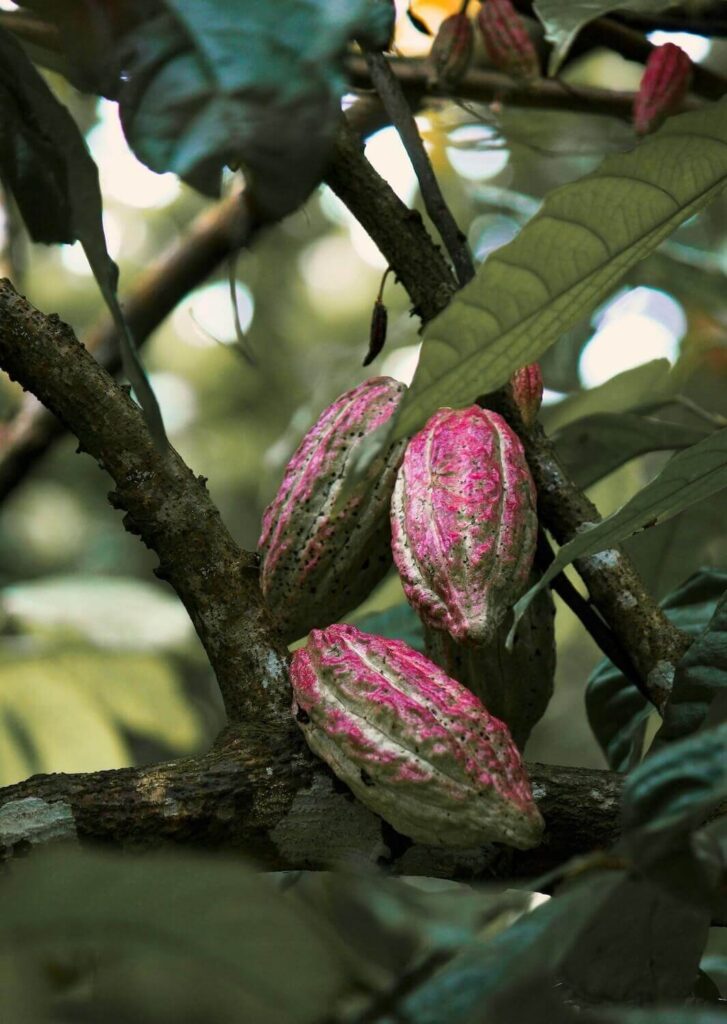
A handful of small farms around La Fortuna run tours that walk you through the process behind two of Costa Rica’s biggest exports, usually in about two hours. You’ll typically start with cacao: how the pods grow straight off the trunk of the tree, how the beans get fermented and dried, and you’ll get to grind your own batch into chocolate before tasting it warm.
The coffee half covers the plant’s path: seedling, harvest, drying patio, and roast, with a chance to try a cup pulled straight from that day’s batch. Most of these tours run $35 to $55 per person and include tastings of both products at the end, sometimes with a side of sugarcane juice pressed the old-fashioned way.
Book ahead during the dry season, since this is a popular half-day option for anyone taking a break from hiking and rivers. Wear shoes you don’t mind getting a little dirty.

Day 5-6 – Cloud Forest Experiences in Monteverde
Days 5 and 6 are in Monteverde’s cloud forest, a different kind of green than what you saw around Arenal: cooler, mistier, and dense with orchids and moss. This is the spot for hanging bridges, ziplines, and a coffee farm tour, plus your best shot at spotting a quetzal. Expect cooler temperatures up here, so pack a light jacket.
Travel from La Fortuna to Monteverde
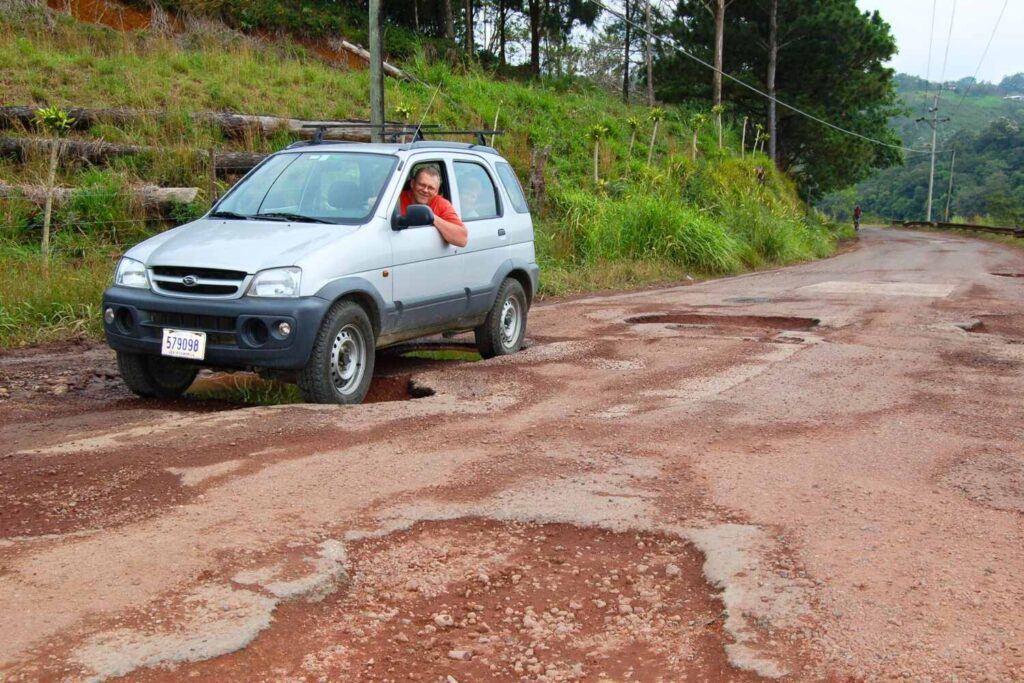
Two routes connect La Fortuna and Monteverde, and the more obvious one isn’t the better one. The standard road route covers about 130 kilometers but takes three and a half to four and a half hours, since a chunk of it runs over unpaved, winding mountain roads that slow everything down.
The more popular option is the jeep-boat-jeep transfer: a van picks you up in La Fortuna, drives to the edge of Lake Arenal, a boat carries you across the water with the volcano behind you, and another van handles the final stretch into Monteverde.
This combo runs around three hours total and costs roughly $30 to $40 per person through most shuttle companies, and it’s a solid way to spend a travel morning instead of sitting in a car the whole time. Either route, book your transfer the day before, since seats fill up fast in high season.
Visit Monteverde Cloud Forest Reserve
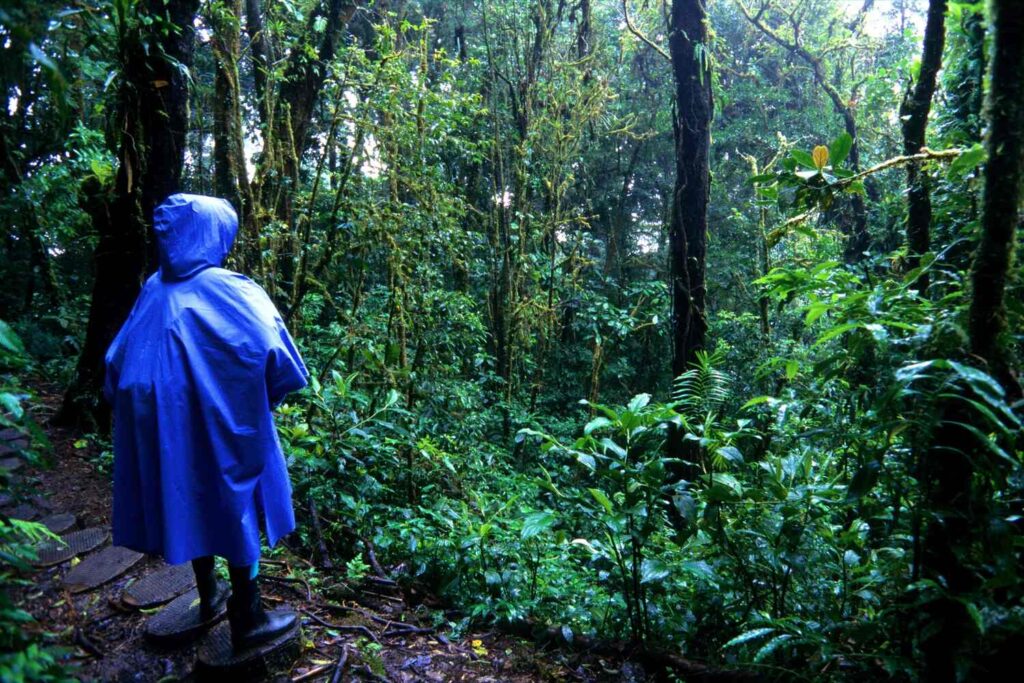
This is the original cloud forest reserve, the one that put Monteverde on the map back in the 1970s, and it changed its ticketing setup recently, so older advice you’ll find online might be out of date.
As of December 2025, there’s no single day pass anymore; instead, you pick one of three timed circuits, each priced at $29 per adult and $16 per child. The Essence Trail covers 1.4 kilometers and passes a waterfall, the Heart of Forest Trail runs 2.8 kilometers and crosses a hanging bridge, and the Continental Divide Trail goes the farthest at 4.1 kilometers, also with a bridge crossing.
Each circuit runs one direction only, with no doubling back and no re-entry once you start, so pick based on how much walking you want to do that day. The reserve opens at 7:30 AM, and a free shuttle from the entrance building runs you the rest of the way in.
Walk the Hanging Bridges at Selvatura Park
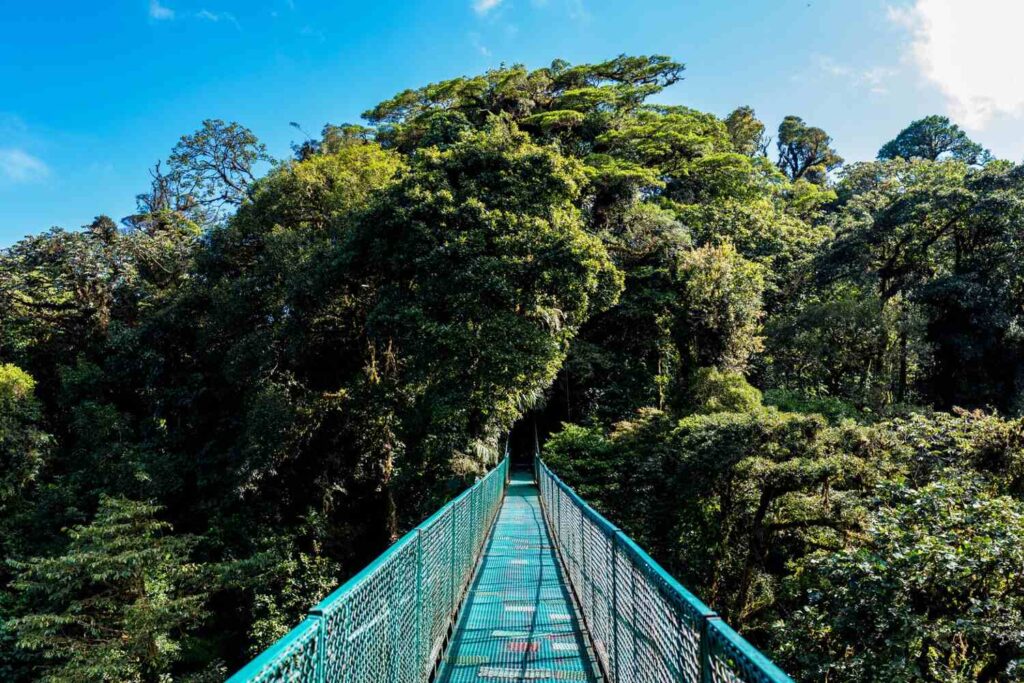
Selvatura borders the main reserve and runs its own set of eight hanging bridges through old-growth cloud forest, with some spans reaching 50 meters above the ground. Self-guided entry costs somewhere between $43 and $49 per adult, and the full loop covers about three kilometers, taking most people an hour and a half.
The bridges here tend to feel sturdier and wider than some of the other parks in the area, which makes this a solid pick if anyone in your group isn’t thrilled about heights.
Beyond the bridges, Selvatura also runs a separate butterfly garden, a hummingbird garden, and an insect exhibit on the same property, all bundled into combo tickets if you want to make a full morning of it. Go early; cloud forest mornings are when the mist hangs lowest and the light through the canopy looks its best.
Visit the Monteverde Butterfly Garden
This stand-alone garden has run since 1989 and covers four separate enclosed habitats, each built to copy a different Costa Rican climate zone, including cloud forest and lowland tropics.
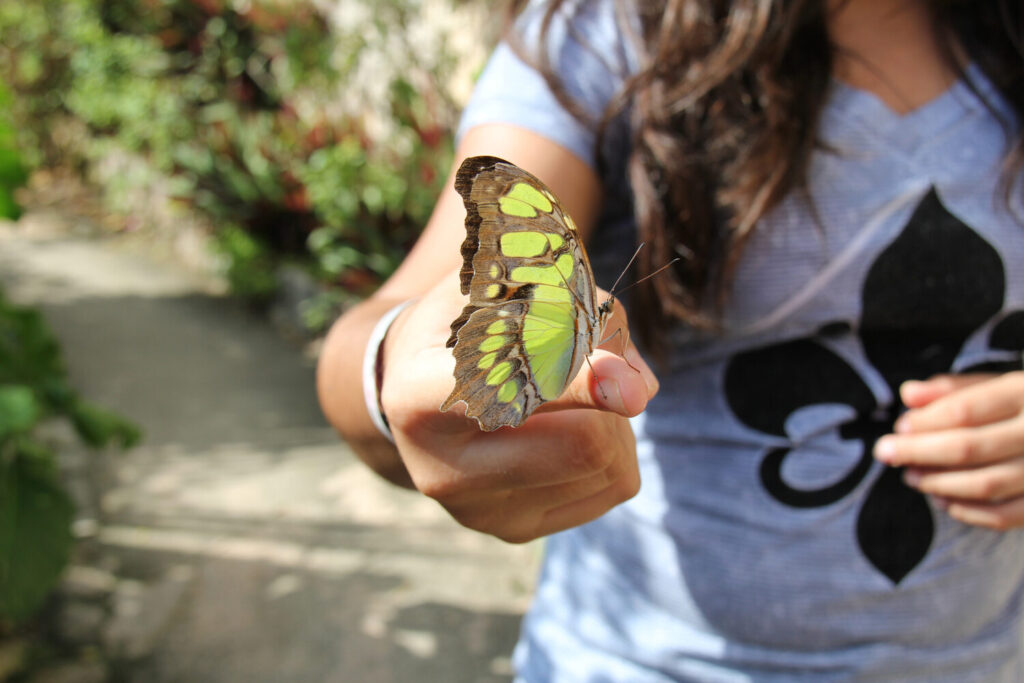
Entry costs $20 per adult, and the price covers a guided walk plus unlimited return visits during your stay in Monteverde, so hang onto your ticket. Over 30 butterfly species live inside, including the blue morpho, whose wings flash an electric blue mid-flight and turn dull brown the second it lands.
Beyond the butterflies, the property also runs a working leafcutter ant colony you can watch up close and a small medicinal plant garden. The garden opens around 8:30 AM and stays open until 4 PM, with butterflies most active between 10 AM and 3 PM when the sun is strongest, so time your visit for the middle of the day rather than first thing.
Try Ziplining & Tarzan Swings at Extremo Park
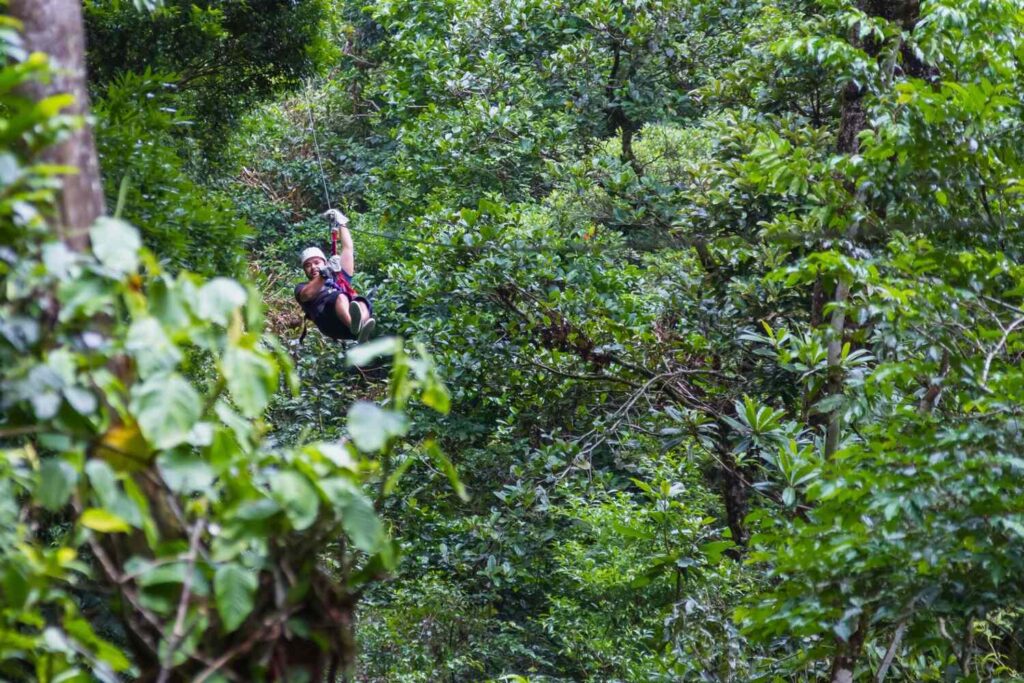
Extremo Park lives up to its name, running the longest zipline course in Costa Rica alongside the highest bungee jump in Central America, for anyone craving a cloud forest day with extra adrenaline mixed in.
The standard canopy tour runs between $65 and $80 per person, covers around 10 to 14 cables depending on the package, and already includes a Tarzan swing, so you don’t need to add anything extra to get that part of the rush. The bigger Mega Tarzan Swing is a separate paid add-on, around $54, and drops you nearly 70 meters before swinging out over the canopy on a 100-meter arc; it’s not for anyone with a weak stomach.
One of the ziplines even runs through an underground tunnel cut into the mountain, which is unusual even by Costa Rica zipline standards. Plan two to three hours for the full tour, and wear closed-toe shoes since open sandals aren’t allowed on the cables.
Take a Coffee Tour at Don Juan Coffee Farm
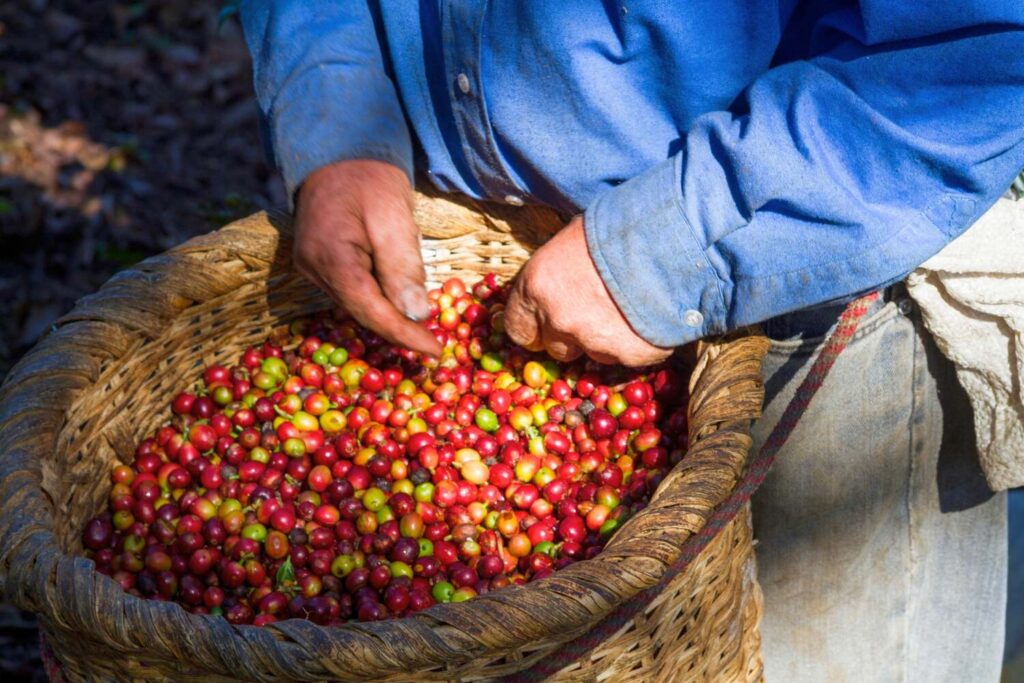
Don Juan is the most established coffee farm tour in Monteverde, covering coffee, chocolate, and sugarcane on the same two-hour visit, with start times at 8 AM, 10 AM, 1 PM, and 3 PM to fit around your other plans. The tour costs somewhere around $45 to $52 per person and walks you through the whole coffee process by hand, including picking your own beans if you visit during harvest season, which runs roughly November through February.
After coffee, the tour moves into the chocolate side, where you grind roasted cacao yourself and taste it before and after the sugar gets added, a practical way to understand why good chocolate costs what it does.
The sugarcane portion wraps things up with an old hand-press demonstration and a cup of fresh-pressed juice straight from the cane. Transportation isn’t included, so plan for a short taxi ride from Santa Elena, usually $5 to $10 each way.
Day 7-8: Beaches & Wildlife in Manuel Antonio
Days 7 and 8 are on the Pacific coast, in Manuel Antonio, a beach town built around a small national park that is truly wonderful. Expect monkeys, sloths, fresh seafood, and a real beach day mixed in with some water sports if you still have some energy.
Travel from Monteverde to Manuel Antonio
This is the longest transfer day of the whole trip, so set expectations accordingly and don’t plan much else for the day it happens. The direct route covers roughly 230 kilometers, but a chunk of the road out of Monteverde is unpaved and slow, which stretches total drive time to four or five hours even with no traffic.
Most shared shuttles route through Puntarenas or Jacó instead of the most direct line, partly because the roads are better that way and partly to break up the trip with a rest stop. Shuttle seats run around $40 to $55 per person and typically include a midway stop where you can grab lunch.
Driving yourself? Fill the gas tank before you leave Monteverde, since stations thin out along the back roads, and budget extra time if it’s rained recently, since some stretches turn rough fast.
Walk Around Quepos Town & Marina Pez Vela
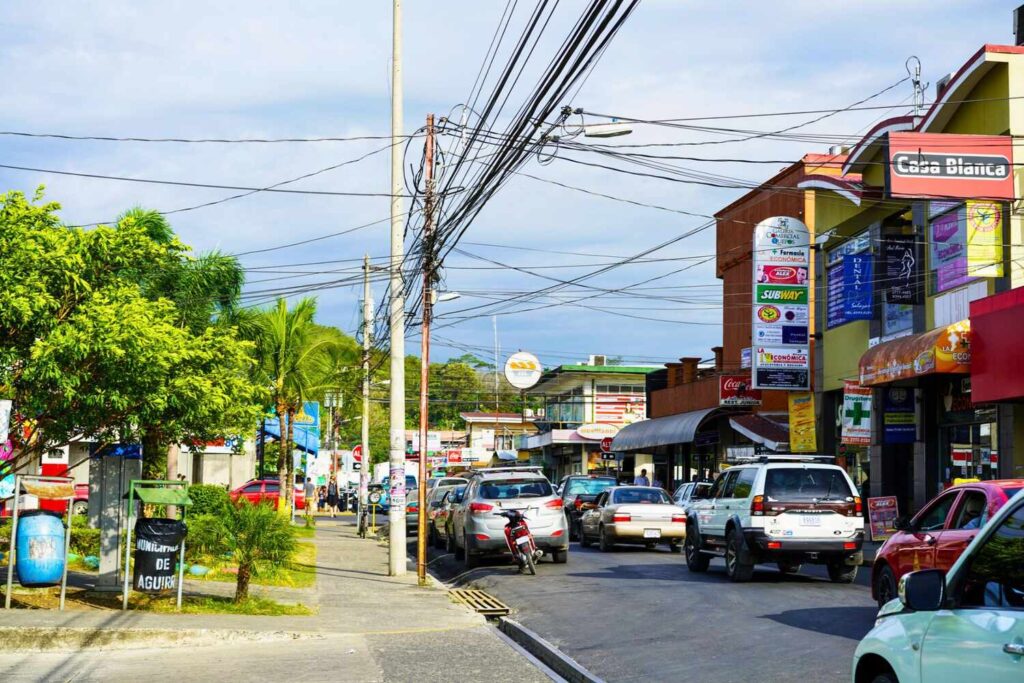
Quepos is the working town just down the road from Manuel Antonio’s beaches, and it’s worth an hour or two before or after the park, especially around the marina. Marina Pez Vela is free to walk into and built specifically for sportfishing; Quepos is one of the top sailfishing spots in Central America to catch sailfish, plus marlin, tuna, and mahi-mahi depending on the season.
Even if you’re not fishing, the marina plaza has restaurants, a gelato shop, and a handful of boutique stores worth a browse, all set around rows of serious-looking boats.
Sunset is the best time to be here, when the bars along the water fill up for happy hour and the boats start trickling back in from the day’s charters. The walk from downtown Quepos to the marina takes about 15 minutes, flat and easy the whole way.
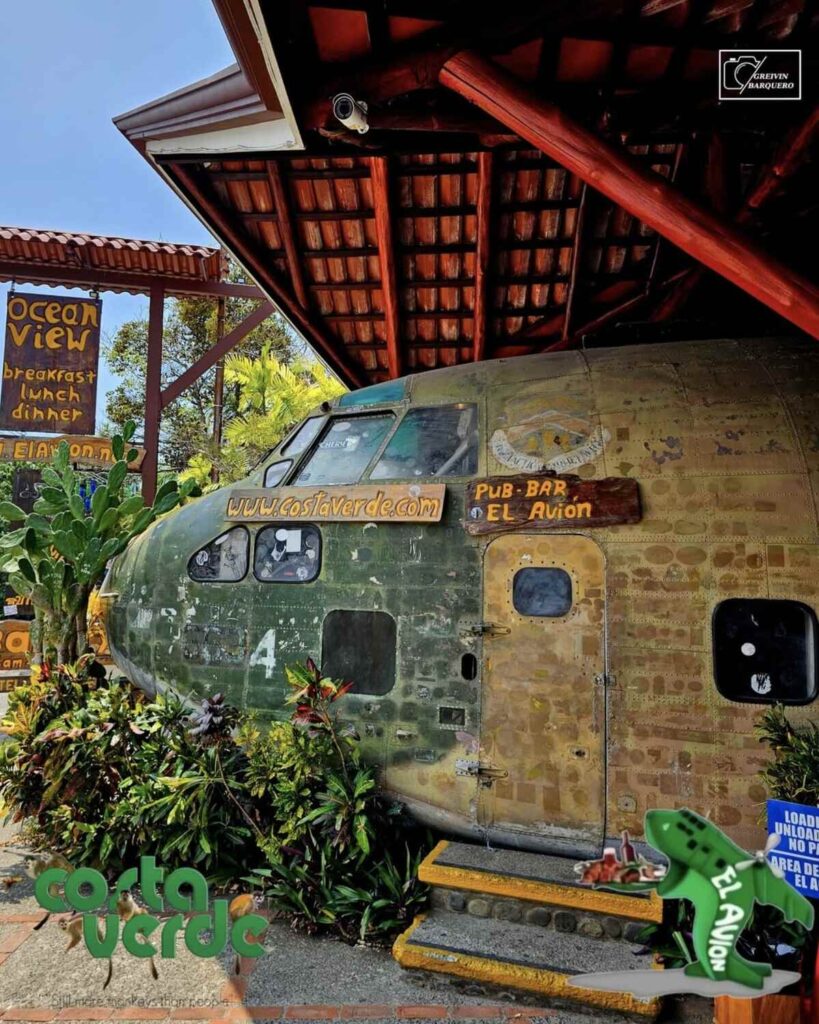
Have Dinner at El Avión
El Avión is built quite literally around a Fairchild C-123 cargo plane, the same model tied to the Iran-Contra arms scandal from the 1980s; this exact aircraft was abandoned at the San José airport for years before a local hotel owner bought it, shipped it down in pieces, and built a restaurant around the fuselage.
You can climb into the original cockpit before your meal, and the open-air decks built into the wings give you a strong sunset view over the Pacific, better than most spots in the area.
The kitchen leans toward seafood: ceviche, whole red snapper, coconut shrimp, and a daily fresh-catch special depending on what came in that morning.
Expect to pay more here than at a typical soda, somewhere around $20 to $35 per plate, since you’re paying for the view and the novelty as much as the food itself. Keep an eye on the roofline during dinner; troops of monkeys pass through fairly often.

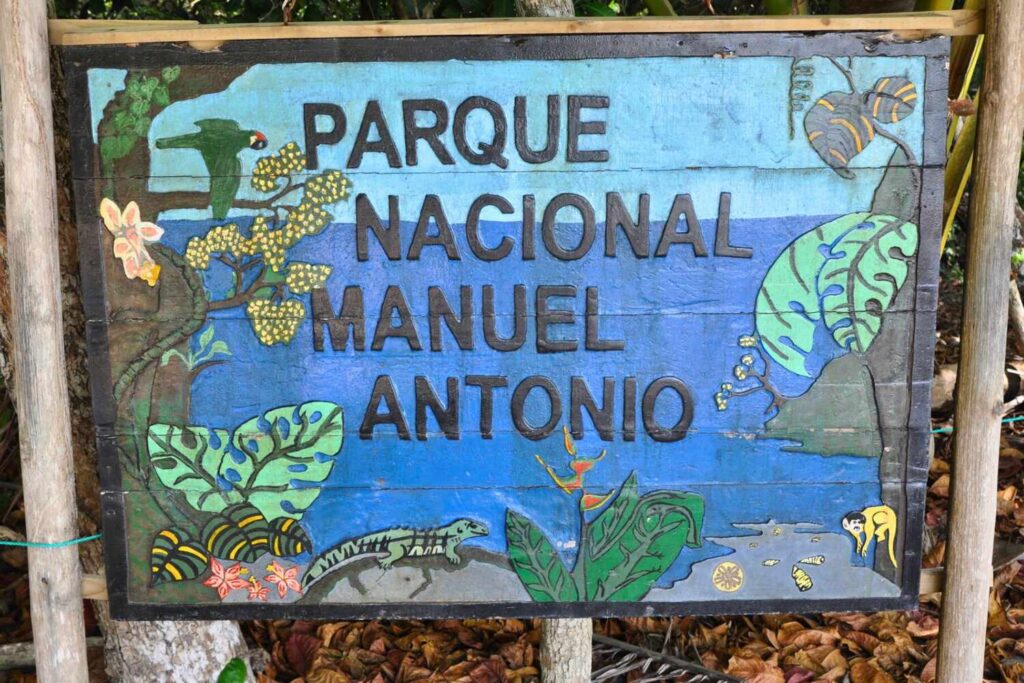
Hike in Manuel Antonio National Park
Before anything else:: Manuel Antonio National Park is closed every Tuesday, so check the calendar before you build the rest of your day around it.
On the days it’s open, hours run from 7 AM to 4 PM, with the last entry at 3 PM, and you can’t buy tickets at the gate anymore; everything goes through the SINAC website in advance.
Entry costs around $16 to $18 per adult plus tax and $5 for kids, and once you’re in, that’s it for the day; there’s no leaving and coming back on the same ticket. The park caps how many people get in each day, so book a few days ahead during busier months, especially December through April.
Inside, a flat, easy trail network connects several beaches and gives you a real shot at spotting sloths, white-faced capuchins, and the smaller, more cautious squirrel monkeys, a species found in only a couple of spots on the planet. No food is allowed past the gate, though water is fine.
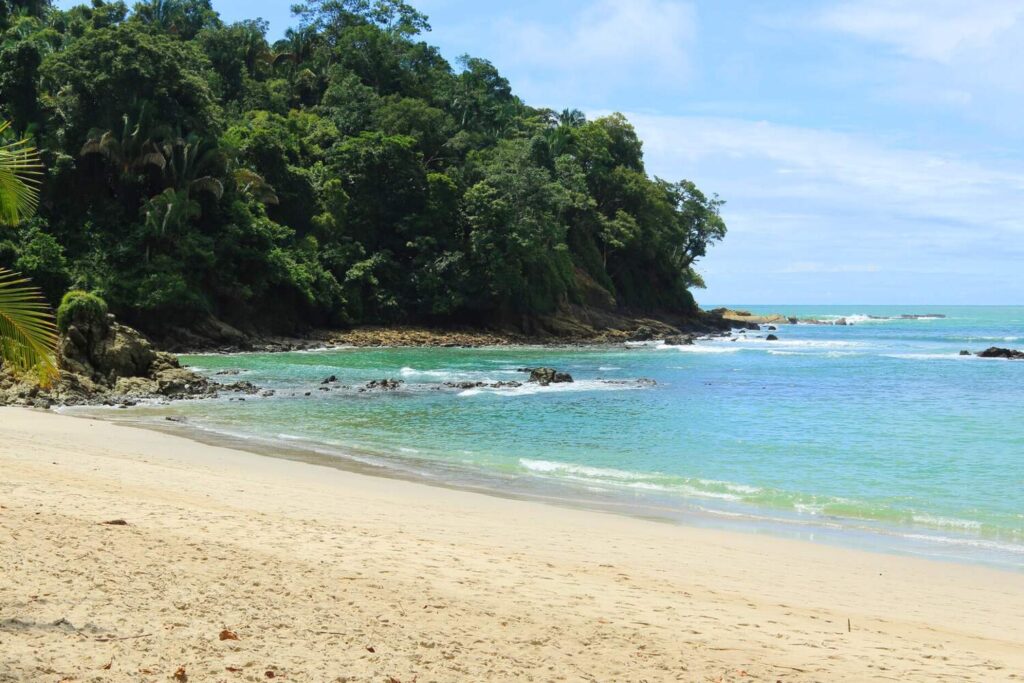
Swim at Playa Manuel Antonio
The park’s main beach earns its reputation: calm, clear water, soft sand, and a coral reef close enough to shore for halfway decent snorkeling without a boat.
Swimming here is actually safer than at most beaches on this coast, since the cove’s shape blocks a lot of the open-ocean current and rip tides that make other Pacific beaches risky. Bring your own snorkel gear if you have it, since rentals near the entrance run higher than you’d pay in town.
The sand stays shaded under tree cover along the back edge, which matters more than it sounds like on a hot dry-season afternoon, and that’s also where most of the wildlife shows up, since capuchin monkeys have learned exactly where people leave bags unattended. Keep food sealed and zipped away; an unguarded bag of chips disappears fast around here. Plan at least two hours here once you’ve finished the main trail.
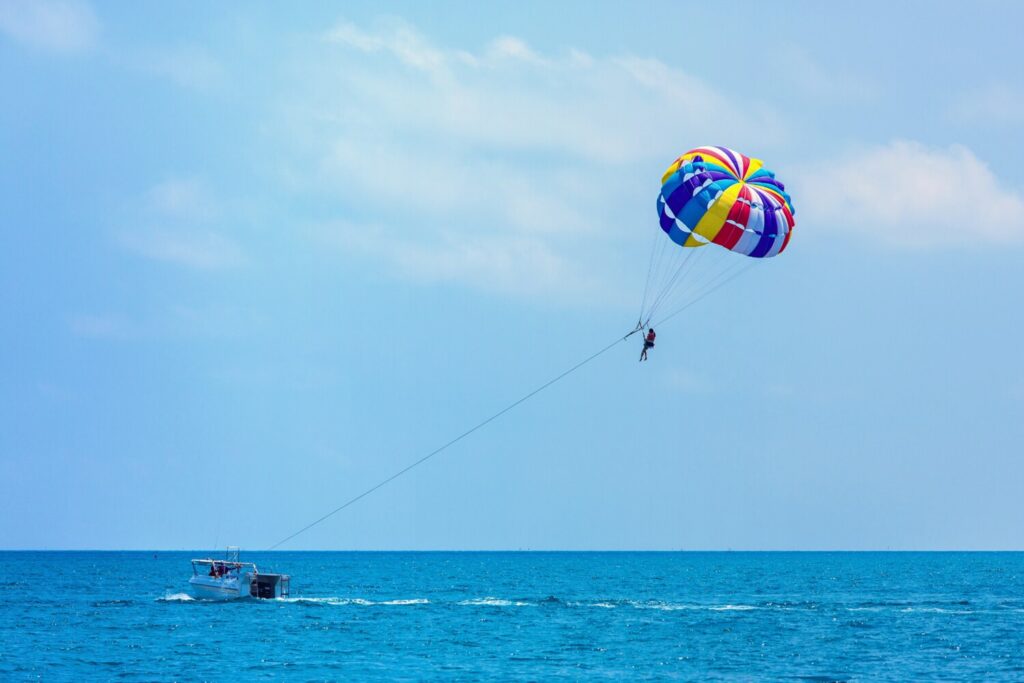
Try Parasailing or Jet Skiing
Marina Pez Vela runs as the launch point for most of the water sport operators working this stretch of coast, and both parasailing and jet skiing are easy to book same-day if the water’s calm.
Parasailing runs you up several hundred feet above the bay, towed behind a boat, for a view of the whole Manuel Antonio coastline you won’t get from land. Expect to pay somewhere around $80 to $100 per person for a 10 to 15 minute flight. Jet ski rentals or guided tours cost less, typically $90 to $150 per hour for either a solo ride or a tandem one, and most operators run a short safety briefing before letting you loose on the water.
Mornings tend to bring calmer water than afternoons, when the wind picks up and the bay gets choppier. Bring a waterproof phone case or leave electronics behind entirely; there’s no graceful way to recover a phone that goes in the water out there.
Take a Sunset Catamaran Tour with Snorkeling
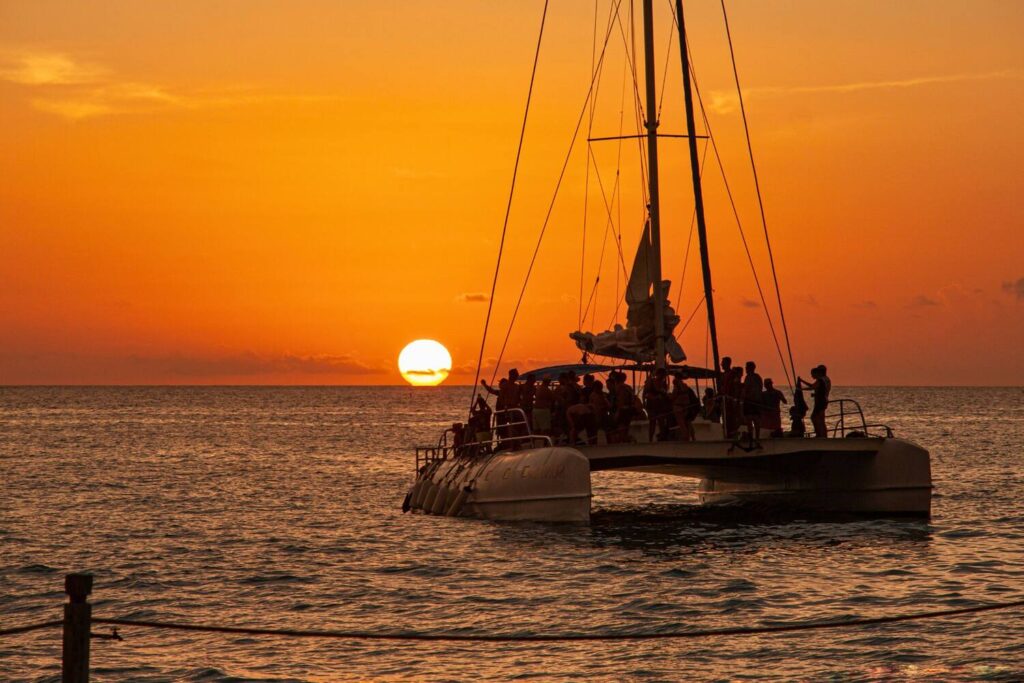
A handful of catamaran operators run daily sunset cruises out of Marina Pez Vela, combining a couple of snorkeling stops with drinks and a meal as the sun drops behind the water.
Most trips run three to four hours total, departing mid-afternoon so you catch the actual sunset somewhere around the halfway point, and prices land between $75 and $110 per person depending on the boat and what’s included in terms of food and open bar. Snorkeling stops usually happen near rocky points along the coast where visibility runs clearer than the main beach, and crews typically supply gear, including fins and masks, as part of the ticket price.
Keep an eye out on the ride for dolphins, which show up fairly often along this stretch, plus the occasional sea turtle near the reef stops. Bring a light jacket for the ride back after dark, since the wind picks up once the sun’s fully down. Arguably one of the nicest things to do in Costa Rica.

Day 9 and 10: Hidden Gems Near San José
Your last two days head back toward San José, with stops built in along the way so the drive doesn’t feel wasted. Expect handcrafted souvenirs, a volcano crater if the weather and timing line up, and one last good dinner before your flight out. This is the part of the trip where you can finally slow down a little.
Drive Back from Manuel Antonio to San José
The drive back covers roughly the same ground as your trip down, around 160 kilometers, and takes three to three and a half hours under normal conditions on a fully paved highway the whole way.
Leave by mid-morning if you have any stops planned, since both Sarchí and Poás eat into the afternoon, and you don’t want to be navigating mountain roads in the dark.
Traffic gets heavier closer to the Central Valley, especially in the final stretch into San José itself, so build in a buffer if you’re catching an evening flight or have dinner reservations.
Returning a rental car? Fill the tank near the airport rather than downtown, since prices run noticeably lower out there. This is also a good stretch to grab gas station snacks or stop at one of the roadside fruit stands that pop up along the highway, since lunch options get sparser the closer you get to San José.
Visit the Town of Sarchí for Handcrafted Souvenirs
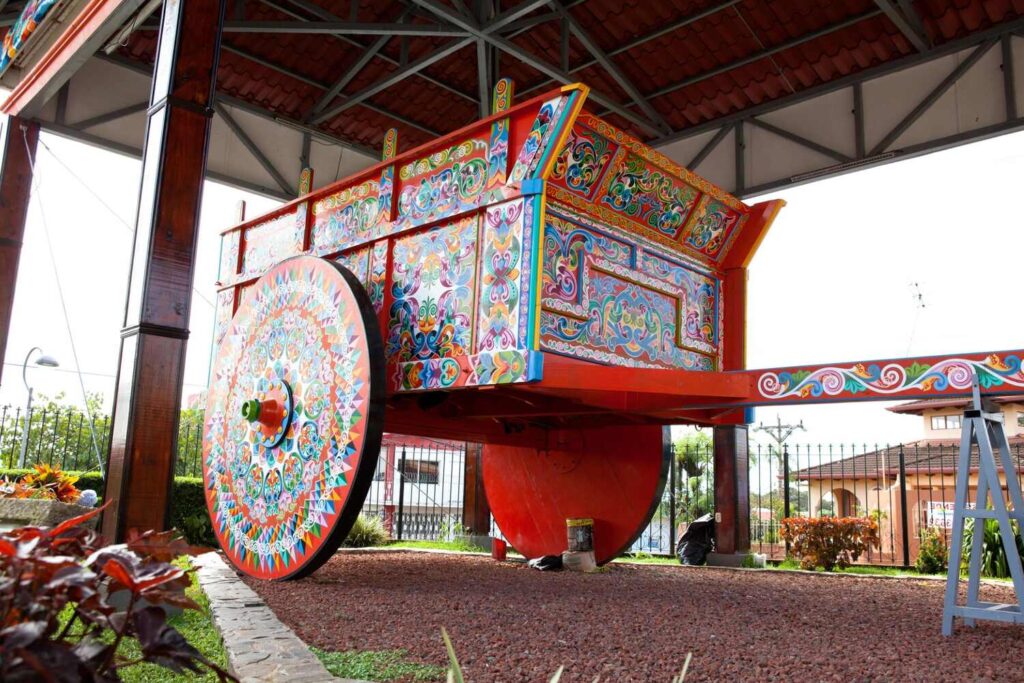
Sarchí is where Costa Rica’s artisan tradition started, and the centerpiece proves it: a 15-meter, two-ton oxcart in the town’s central park, built in 2006 and still the largest one anywhere.
These brightly painted oxcarts used to haul coffee down from the highlands before paved roads existed, and the tradition earned UNESCO recognition back in 2005 for its cultural value.
The Joaquín Chaverri Oxcart Factory, running since 1902, is the oldest workshop in town and still lets you watch artisans hand-paint the same geometric patterns passed down for generations.
Beyond oxcarts, more than 200 small shops and workshops fill the streets selling carved wood bowls, leather rocking chairs that fold flat for the trip home, and small painted trinkets that cost a fraction of what you’d pay in San José gift shops. There’s no entrance fee for the town itself; just budget time and cash for whatever catches your eye.
Explore Poás Volcano National Park (if time allows)
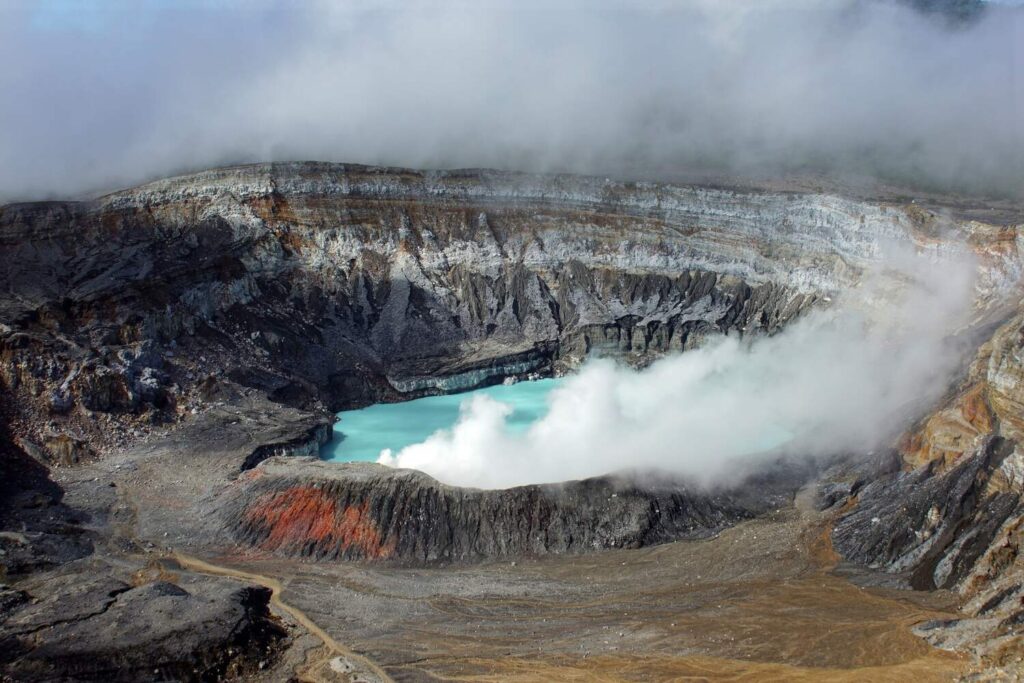
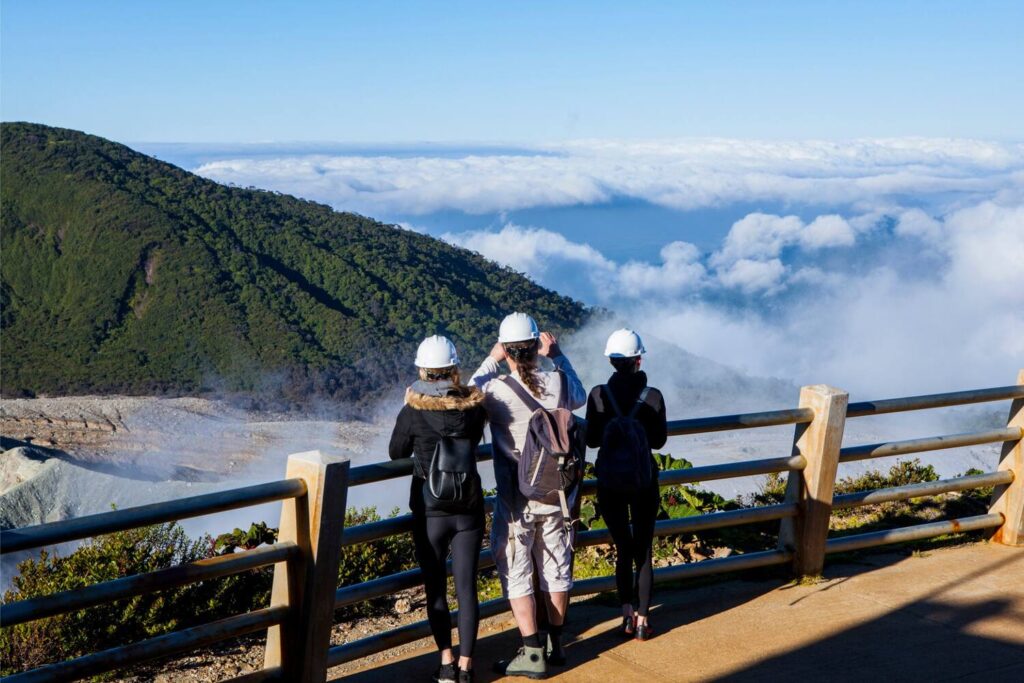
Poás has one of the widest crater rims in the world, almost a mile across, with a turquoise, acidic lake steaming at the bottom on a clear day, though clouds roll in fast at this elevation.
Entry costs $15 per adult plus tax and $5 for kids, and tickets only sell online through SINAC ahead of time; nobody gets in without a pre-booked slot, and there’s no buying at the gate. The park opens at 7 AM or 8 AM depending on the season, with the last entry slot around 1:20 or 2 PM, and the smart move is grabbing the earliest available time, since clouds typically swallow the crater by mid-morning.
Once inside, the walk to the main viewpoint takes about 10 minutes on a paved, easy path, and rangers usually give your group about 20 minutes at the rim before moving the next group through. Parking costs a few dollars extra, paid in cash at the lot, separate from your entrance ticket.
Enjoy a Farewell Dinner in San José
For your last night, head back to Barrio Escalante if you haven’t had enough, or try Escazú or Santa Ana on the west side of the city for a different, more upscale scene with plenty of international options mixed in with Costa Rican cooking.
A proper send-off meal here might mean fresh ceviche, a grilled whole fish, or a tasting menu built around ingredients sourced from small farms around the Central Valley, all things this city does well once you get past the typical downtown strip.
Mid-range restaurants run $20 to $35 per person for a full meal with a drink, while the higher-end tasting menu spots can run double that or more. Book a table in advance if you’re set on somewhere specific, particularly on a weekend, since the better spots fill up fast with locals out for the night too. Save room for dessert. Tres leches cake and coffee flan are the two classics worth ordering, and most kitchens here do justice to both.
Shop for Souvenirs at Mercado de Artesanía
Before heading to the airport, stop by the Mercado de Artesanía in San José for some last-minute shopping. It’s generally agreed to be the cheapest place in the city for handmade goods.
It’s open daily, including holidays, from 8 AM to 6:30 PM, and entry is free; you only pay for what you actually buy. Inside, around 50 stalls sell wood carvings, Chorotega pottery made using techniques that go back to pre-Columbian times, miniature painted oxcarts if you missed Sarchí, leather goods, and jewelry, much of it noticeably cheaper than what you’d find at other markets around the city.
Haggling is normal here and expected, especially if you’re buying more than one item from the same stall; a polite back-and-forth on price rarely offends anyone running these booths. Bring colones if you can, though most vendors take dollars and cards too. This makes a solid final stop before you head to the airport or settle into your last San José dinner.
FAQ About Costa Rica Travel
Below you’ll find quick tips on money, timing, and safety to keep you cruising smoothly. Currency, how many days to spend, which SIM card to get, these FAQs cover the basics.
What Currency Is Accepted in Costa Rica?
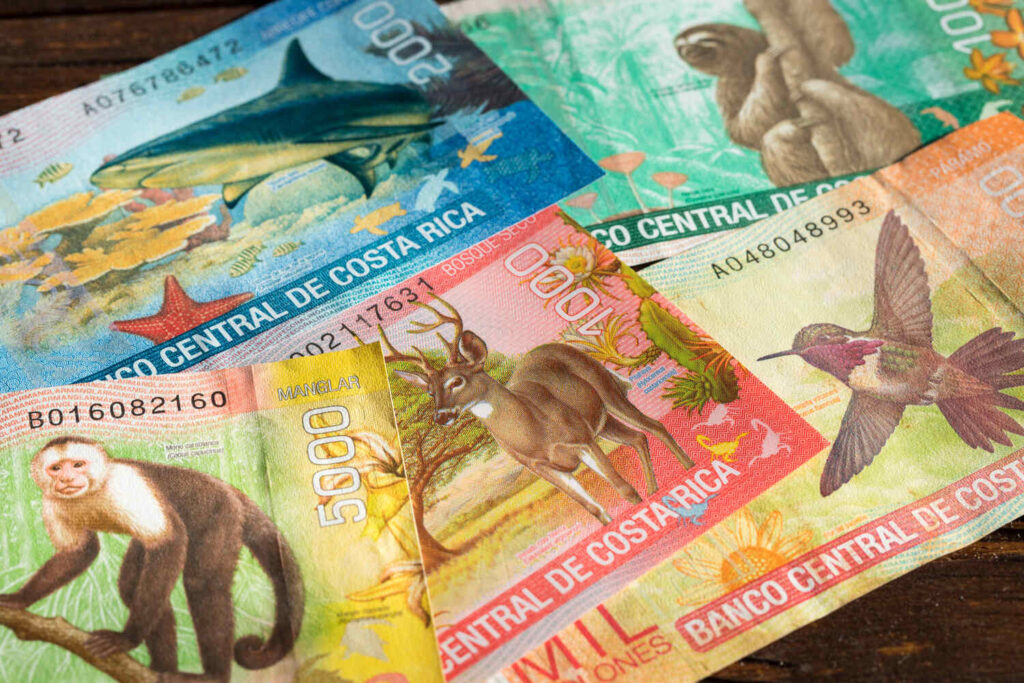
Costa Rican colón is the official currency, but US dollars are accepted almost everywhere. You’ll see prices listed in both, especially in busy areas. There are ATMs in cities but they tend to be sparse in remote parts.
We recommend you withdraw from a Banco Nacional ATM in San José for better rates and lower fees. Small businesses may round prices if you pay with dollars. Carry small bills, because larger notes can be hard to break. Also, avoid private exchange booths because they will charge a premium.
How Long Should You Spend in Costa Rica?
Honestly, spending 10 days in Costa Rica is enough to see the highlights, but more time never hurts. If you have two weeks, add Uvita and Santa Teresa to your itinerary, both are worth the extra days.
Is Costa Rica Safe?
Costa Rica is pretty safe overall. You’ll see petty theft in bigger towns, so keep your pockets zipped and eyes on your bag. Just like everywhere in the world, avoid wandering alone after dark in dim streets.
Most highways are well‑maintained, but drive carefully, nighttime signage can be lacking. Stick to official taxis or ride‑hailing apps; random rides are a gamble you don’t want to take.
Is Costa Rica Expensive to Visit?
Costa Rica isn’t exactly pocket‑friendly, but you won’t break the bank either. You’ll pay more for lodging and tours than in neighboring countries, especially in places like Nosara or Santa Teresa.
Mid‑range hotels run about $80–$120 per night. Local meals at sodas (small restaurants) cost $5–$10, while popular spots charge double. Buses are cheap, while shuttles and internal flights cost more but they are more convenient of course.
National parks charge entrance fees, plan for $15–$25 per park, but do keep a part of your budget for activities, as they are amazing.
Do You Need a SIM Card in Costa Rica?
A local SIM card is useful for maps, translations, and staying connected. Kolbi has the best coverage, while Claro and Liberty may lose signal in remote areas.
SIM cards can be purchased at the airport or in phone shops across the country. A 10-day data pack is usually enough for most trips, and prepaid Flex packs offer extra data at a lower cost.
You can easily top up credit through provider apps to make sure you stay connected when you need it.
What’s the Best Time to Visit Costa Rica?
The dry season is from mid-December to April, has sunny days with minimal rain, but it’s also the busiest and most expensive time. The green season, from May to November, brings regular rainfall, fewer tourists, and noticeably greener scenery.
Early May and late November often offer a balance of good weather and smaller crowds. Wildlife is more active during the wetter months. Many hotels offer discounts during the low season, worth factoring in if your dates are flexible.
Conclusion
That’s everything you need to plan 10 days in Costa Rica. You’ll hike, swim, and eat your way through the capital, the cloud forest, and the coast. Of course, if you can do a Costa Rica road trip, even better!
Flex your plans if rain calls; this country rewards spontaneity. Slow down, smile at people, and don’t rush your meals. That’s pura vida in practice. Ten days is just a start. There’s plenty left for next time!